Goal Journaling – Free Download

Struggling to accomplish your goals?

Learn how you can journal your goals for ultimate success

Download the free Goals Guide and Journal now

Dear Goal Setter,

Goals fuel your desire to reach your dreams. They give you the inspiration necessary to aim for the stars. Goals help you take control of your life. They help you focus on what’s most important. Goals can help you get better organized and work more efficiently. Goals help you be more self-confident and enthusiastic about what you’re doing.

Everyone needs to have goals they are working towards each day. If your daily actions are not working towards your goals then it’s time to make some changes. If you’re not getting what you want from life, chances are you are lacking in goals or are not actively working towards them every day.

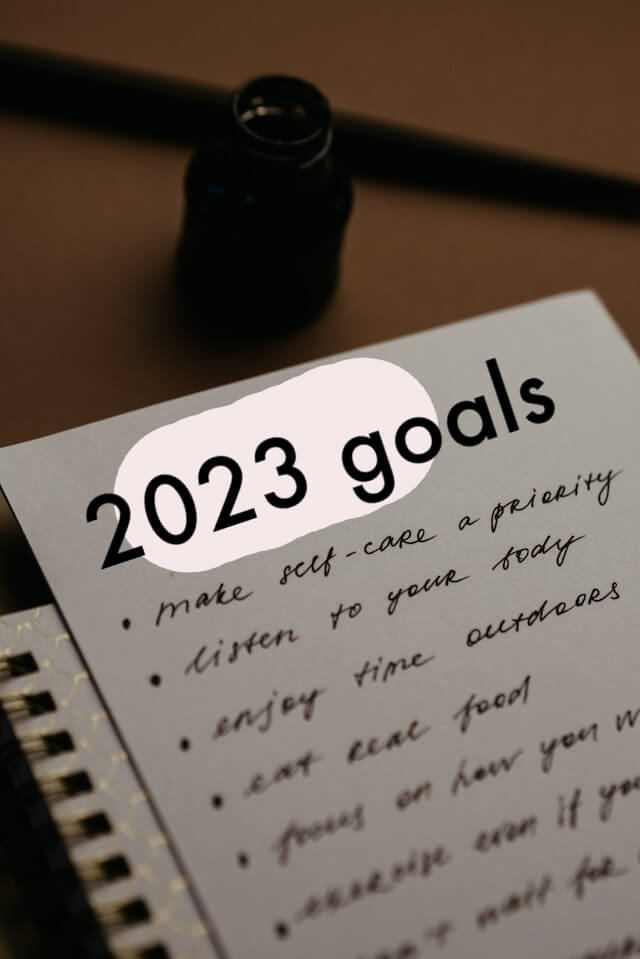
In this free guided journal, you will learn how to document your goals and how you can benefit from documenting your progress every day.

Sign up now to receive your free “My Goals” journal to track your goals and progress towards them. Here’s what you’ll get:

 A guide on why setting and documenting your goals are so important and how you can best document them

10 Prompts to get you started documenting your goals and quotes to keep you motivated

Space to journal your goals and document your progress

Claim Your Free Access to the “My Goals” journal

Simply enter your name, email address and click ‘Sign Me Up!’ below to instantly receive your journal right away.

Your privacy is protected, and your email address will only be used by The Awakening Tulip to communicate with you about goals related subjects. You can cancel your subscription at any time.

If you are ready to start reaching your goals, then get signed up right now. Just enter your first name and email address above to get the journal now.

Download free Goals Journal

Here’s to Reaching Your Goals,

Kimberly Cornier – Spiritual Life Coach

Copyright © The Awakening Tulip. All Rights Reserved.

Exploring the Inner Journey: An Introduction to Spirituality

In a world often overshadowed by concrete jungles and fast-paced living, many of us yearn for a deeper connection with nature and a sense of spirituality that resonates with the rhythms of the Earth. If you find yourself drawn to the whispers of the wind, the dance of the seasons, and the mysteries that lie within the natural world, then our course, “Rooted in Nature: An Introduction to Earth-Based Spirituality,” is tailor-made for you.

At its core, Earth-based spirituality embraces the belief that the Earth is a living, conscious entity deserving of our respect, reverence, and care. It acknowledges that the natural world is a source of wisdom, inspiration, and spiritual guidance, offering profound lessons and insights if we open our hearts and minds to them. This course aims to introduce you to the fundamental principles, practices, and philosophies of Earth-based spirituality, providing a solid foundation for your personal exploration and growth.

Throughout this transformative journey, you will delve into ancient wisdom traditions, indigenous cultures, and contemporary earth-centric practices. Drawing from diverse sources, including shamanism, paganism, and eco-spirituality, you will discover the common threads that weave these traditions together, highlighting the universal human connection to the Earth and its intricate web of life.

Our experienced instructors will guide you through a wide range of topics, including connecting with the elements, understanding the cycles of nature, exploring sacred landscapes, working with plant medicine, and honoring ancestral wisdom. You will learn practical rituals, ceremonies, and meditation techniques that can help you deepen your connection with the natural world, while also fostering personal growth, healing, and self-discovery.

In addition to the theoretical aspects, this course offers ample opportunities for experiential learning. You will embark on guided nature walks, engage in hands-on activities, and participate in group discussions that encourage open dialogue and the sharing of personal experiences. These immersive experiences will allow you to forge a profound relationship with the Earth, expanding your awareness and opening doors to the transformative power of the natural world.

By the end of the course, you will have gained a deeper understanding of Earth-based spirituality and its practical application in your daily life. You will have cultivated a heightened sense of reverence and gratitude for the Earth and its interconnected web of life. Armed with this knowledge and experience, you will be empowered to live in harmony with nature, making conscious choices that support the well-being of our planet and all its inhabitants.

If you are ready to embark on a transformative journey into the heart of Earth-based spirituality, “Rooted in Nature: An Introduction to Earth-Based Spirituality“. Discover the profound wisdom, healing, and connection that can be found when we open ourselves to the teachings of the natural world. Embrace the sacredness of the Earth and let it guide you towards a more fulfilling and harmonious existence.
Guided and Non-guided Meditations

Meditation

MEditaiton

Meditation is a helpful tool for many people in their journey towards better mental, emotional and physical health.

While there are many meditation practices and techniques, the two main types are guided and non-guided meditations. Both practices offer unique benefits, so it’s important to understand the differences between them in order to decide which is best suited for your own needs.

Guided meditations are a form of directed meditation, in which an instructor or a recording provides verbal guidance or prompts throughout the practice. This often includes narrating specific visualizations, poses, or breathing techniques, as well as guiding the meditator through the entire process. Guided meditations are best for people who are new to meditation, or for those who need extra help to stay focused and motivated. The instructor can provide encouragement and support, which can help the meditator stay on track and get the most out of their practice.

Non-guided meditation, also known as mindfulness meditation, is a type of meditation in which the meditator focuses on their own body and thoughts, without being guided by an instructor. Non-guided meditations are best suited for people who are already familiar with meditation and can maintain a focused and relaxed state on their own. These meditations are often used as a form of self-exploration, allowing the meditator to get in touch with their inner self and cultivate an attitude of acceptance and self-awareness.

Whether you choose to practice guided or non-guided meditation, the most important thing is to find a practice that works for you and that you can stick with. Take the time to explore both types to see which one is most suitable for your lifestyle and your needs.

Journaling

Journaling

When I first started journaling, I had no idea how it worked. I thought it was just recording what happened during my day.  As I got older and started to understand what a wonderful tool it is.

Journaling allows you to work through your emotions and dive deeper into your everyday thoughts and behaviors.

  • Having trouble knowing what write or feeling uninspired.  Try doodling drawing etc to get juices flowing.
  • Create a running list of journal prompts that you can turn to in a pinch.
  • If physically writing out your thoughts is causing writer’s block, don’t force yourself to stick with it. You can type in Google docs or use your phone’s notepad application. Digital journals are easy to back up, access, and organize.
  • Let yourself be messy, your journal isn’t here to look pretty. It’s here for you to explore your thoughts, work through big emotions, and encourage introspection.
  • Don’t Edit as You Go – If you make a mistake, scribble it out and keep going. ‘Mistakes” distract you from your train of thought.
  • Carry Your Journal at All Times, you can write whenever inspiration strikes (and you have a few minutes to spare!) Can’t write the entry immediately, jot down a vague heading and some bullet points containing your thoughts and ideas. Later, you can remind yourself what you thought and write the full entry.
  • Write to Yourself – great way to track your progress and growth. Try to remember what it was like to be 5, 10, or 20 years younger. What were you worried about? What were your dreams? After putting yourself in a smaller pair of your own shoes, write a letter to that version of yourself.
  • Write about the people you know now, your job, your family, your pets, your habits, things you’ve overcome, and areas where you’ve changed. Compare and contrast your life now and then.
  • Write About What You Want – don’t force yourself to write about something that irritates you. Your journal is a tool meant for your benefit and growth. If you hate a prompt, get annoyed with a specific journal structure, or find an entire guided journal infuriating – you don’t have to stick with it.
  • Write In Different Places – they can trigger different memories and bring out different aspects of your personality
  • Turn Off Distractions
    • Turn off your phone if you can, otherwise put it on silent and place it face down. Put away anything that will distract you as you’re writing.
  •  Set a Timer – set a judgment-free timer for 10 or 15 minutes. If the timer  goes off and you’ve found a flow or are on a thought path you want to dive deeper into, you can continue! But you can’t stop until the timer goes off.

Stream of Consciousness  – write down whatever pops into your head. Don’t worry about finishing sentences – if your thoughts switch, your writing must too!

Overcoming Limiting Beliefs

Overcoming our limiting beliefs is a lifelong project, it is doubtful that you will be able to eliminate all your limiting beliefs. However, you can overcome the ones that are blocking you from what you want.

 There are many things that help overcome your limiting beliefs.  Not everyone will work for everybody, but they can give you a place to start.

1. Organize Your Environment – Having a well-organized and spacious environment could improve your mental health and encourage positive thinking.

2. Try Minimalism – The fundamentals of minimalism are clarity, honesty, and detaching from material things. Minimalism is all about your mindset and resisting peer pressure.

3. Help open your mind and learn. Let curiosity lead you. When you give in to curiosity, you’re more likely to explore the world around you and break out of your comfort zone. Curiosity also creates opportunities for you to learn about other people’s beliefs and observe new ideas.

4.  If you’re struggling to change your limiting beliefs on your own, you could benefit from the help of a therapist or counselor. It you are suffering from anxiety or depression; professional help can help you move forward.

5. Meditation – Beliefs often originate from the thoughts of others that worm their ways into our own, so tackling your own thoughts could help you change negative beliefs. To help identify what your beliefs are take a few minutes a day to meditate. The goal of meditation should be to let thoughts pass through your mind without engaging in them. It will help you calm your mind and connect with your inner self.

6. Personal Development – actively seek opportunities for development and growth in all aspects of your life. 

7. Positive Affirmations can be used improve your self-esteem.

8. Journaling – writing about the thoughts and feelings you have, what trigger them and who said them can help you identify and breakdown where that belief came from and why.

How to Identify Your Limiting Beliefs

  1. Start by writing down your general beliefs.
    For me this is an incredibly hard thing to do.
    My beliefs are ingrained, and I do not really think about them. I am still identifying the beliefs I hold.
    Some are pretty easy to identify.
    Every has a right to their beliefs. I do not have the right to tell them what to believe.
    I believe that killing is not right. Also, there are many forms of killing.
    If a child is excited to give you a gift and you look at is an tell them everything, they did wrong – this is a form of killing.
    A friend is really excited with their new outfit. You think it is the ugliest thing you have ever seen, and you tell them that.
    You are inflicted your beliefs on someone else and in the process making them doubt themselves and feel bad.
    It is not alright to tell a lie. (This sort of conflict with the previous belief.) I have learned that I can tell the truth without hurting others. No matter what I feel about something there is always good to be found.
    Telling the child that you appreciate the effort and though that went into their gift.
    Telling your friend that it is obvious that they love the outfit.
    Others are a bit harder to figure out.
    I recently had an experience where I was convinced that I would do nothing right. It was really weird in that the voice I heard was not my own. It was my grandmothers.
    I had been told often in my childhood that I could do nothing wright. As an adult, I understand that my grandmother did not really mean it so I thought I did not have to worry about it.
    Unfortunately, it came up in an on-line class I am taking where I keep forgetting specific steps. I would badger myself railing that I could to nothing right.
    – this is situational and would not come up until a certain set of circumstance came up .
    WE are not limited to non-supportive beliefs only. We have a lot of belief that are very supportive.
    I can talk to people and make them feel better.
    Smiling and acknowledging other, improves their day. Write down beliefs about anything you feel strongly about and that influences your daily life.
    Group them into different categories like finances, family, relationships, or health.
    Identify if the belief is helping you grow, and which could be limiting you.
    This is on an ongoing process. Sometimes a belief will not show up until you a presented with a specific situation, expect this process to continue throughout your life.
  2. Assess Your Behavior
    Another approach to identifying limiting beliefs is assessing your behavior.
    Think about scenarios where you’ve acted in toxic ways. If you look closely at your toxic behaviors, you might discover that the underlying cause is limiting beliefs.
    For instance, if you find it difficult to speak your mind when someone has offended you, you may possess the limiting belief that conflict is bad.
    This, in turn, could keep you from having truly intimate relationships as you’re unable to speak your mind and have healthy confrontations.
  3. Write Down Areas Where You Feel Challenged
    Record areas of your life where you have recurring challenges, these could be indicative of limiting beliefs.
    Perhaps you can’t seem to land a well-paid job, or you never have luck when it comes to love.
    These challenges may simply be the byproduct of erroneous beliefs that you’ve adopted as truths.

As you identify each belief, make a note of which beliefs make you feel tight, uncomfortable unworthy or any other unsupportive emotion.
So, if you’re always struggling to make enough money, uncover what you think about money and how accessible it is to you.

What are limiting beliefs

Limiting Belief

Limiting beliefs are self-sabotaging and untrue thoughts that a person believes to be true about themselves and their capabilities.

These beliefs limit a person’s potential and keep them from reaching their goals. Some examples of limiting beliefs include: “I’m not smart enough,” “I’m not talented enough,” “I can’t succeed,” “I’m not good enough,” “I’m not worthy,” and “I’m not capable.”

Limiting beliefs can be extremely damaging and can prevent a person from achieving their dreams.

These beliefs can be acquired through childhood trauma, negative experiences, or even society’s standards. For example, if a child fails a test, they may develop a limiting belief that they are “not smart” or “not capable” of succeeding in the future, even though this may not be true.

To overcome limiting beliefs, it’s important to recognize them and challenge them.

Acknowledge the thought, but don’t let it define you or hinder your progress.

Working on self-confidence, self-awareness, and self-acceptance can also be beneficial in overcoming limiting beliefs.

Ultimately, it’s important to recognize that we all have potential, and everyone deserves to be given the opportunity to succeed.

Creating a Meditation Space in Your Home

Meditation is an important activity for both physical and mental wellbeing. It can help you relax and de-stress, as well as increase your awareness and mindfulness.

Creating a dedicated meditation space in your home can help you to create a habit of regular meditation and deepen your practice.

Here are some tips for creating a calming and inviting meditation space in your home:

  1. Choose the Right Location: Choose a room or corner of your home that is quiet and away from disruptions. It should be a space that feels welcoming and comfortable, and where you can easily relax and focus on your meditation practice.
  2. Set the Mood: Create an atmosphere that is conducive to meditation. Consider adding candles, an essential oil diffuser, or incense to scent the room. Also, add some pillows or cushions to make it more comfortable to sit on the floor.
  3. Add Objects of Inspiration: Add objects that you find inspiring and calming. This could include artwork, crystals, plants, or other items that have a special meaning for you.
  4. Get Comfortable: Wear comfortable clothing and shoes to help you relax. If you tend to get too hot or cold, consider adding a fan or space heater to your meditation space.
  5. Get Organized: Keep your meditation space neat and organized. This can help you to focus on your practice without being distracted.

With these tips, you can create a calming and inviting meditation space in your home that will help you deepen your practice and relax your mind and body.

0
    0
    Your Cart
    Your cart is emptyReturn to Shop
    Verified by MonsterInsights