
Energetic Hygiene in Relationships

Protecting Your Spiritual Space Without Closing Your Heart

Have you ever walked into a room feeling centered and peaceful, only to leave an hour later feeling depleted, heavy, or carrying an inexplicable sense of irritability?

When we love someone—whether a romantic partner, a close friend, or a family member—we naturally open our hearts and subtle energy bodies to them. But without conscious boundaries, empathy can quietly morph into energetic enmeshment. Instead of connecting soul-to-soul, we become emotional shock absorbers, sponging up vibrations, unresolved stress, and unexpressed moods that were never ours to hold.

Just as we wash our hands, brush our teeth, and shower after a long day, our spiritual and emotional bodies require the same baseline care. Practicing energetic hygiene in relationships is not about building defensive walls or withdrawing affection; it is the sacred art of honoring your energetic sovereignty so you can love from abundance rather than exhaustion.


What Is Energetic Hygiene?

Energetic hygiene refers to the daily awareness, clearing, and maintenance of your energetic field (aura, chakras, and emotional body).

In close relationships, energy constantly flows back and forth. You share laughter, physical intimacy, intellectual stimulation, and silent glances. However, when boundaries are porous, energetic cords form unconsciously. You begin carrying your partner’s workday anxiety, your friend’s chronic pessimism, or a relative’s latent guilt.

True energetic hygiene creates a distinct boundary between compassion and absorption. Compassion is holding space for someone while remaining rooted in your own center; absorption is plunging into the storm with them and drowning in their turbulence.


5 Signs Your Spiritual Space Is Being Compromised

Energetic contamination in relationships rarely announces itself loudly. It usually creeps in through subtle emotional and physical cues:

  1. The “Post-Interaction Crash”: You consistently feel exhausted, brain-fogged, or physically wiped out after speaking with someone, even if the conversation was seemingly ordinary.
  2. Sudden, Unexplained Mood Swings: You feel peaceful until your partner walks through the door feeling stressed, and within five minutes, your own nervous system is in fight-or-flight mode.
  3. Loss of Creative Inspiration: When your field is crowded with external mental and emotional noise, your inner voice and creative spark feel muted.
  4. Resentment and Compulsive Fixation: You find yourself mentally rehashing the other person’s problems or obsessing over how to fix their mood.
  5. Physical Heaviness in the Solar Plexus or Heart: You might experience tightness in your chest, shallow breathing, or a persistent knot in your stomach when in their presence.

5 Sacred Rituals for Relationship Energetic Hygiene

Protecting your energy does not require you to become an ascetic or cut ties with everyone going through a difficult season. Instead, integrate these simple, grounded practices into your daily rhythm.

1. The Daily “Who Does This Belong To?” Inquiry

Whenever you notice an acute shift in your emotional landscape, pause, place one hand on your heart and one on your belly, and ask internally:

“Is this sensation mine, or am I carrying this for someone else?”

If the energy is not yours, you do not need to analyze why the other person feels it. Simply breathe in deeply and exhale with the intention: “I return all energy that is not mine, with love and consciousness, back to its source.”

2. The Golden Cocoon Visualization

Before stepping into high-contact social spaces, difficult conversations, or even dinner at the end of a long workday, spend two minutes anchoring your aura:

  • Close your eyes and visualize a luminous boundary of golden or violet light enveloping your entire body, about 12 to 18 inches off your skin.
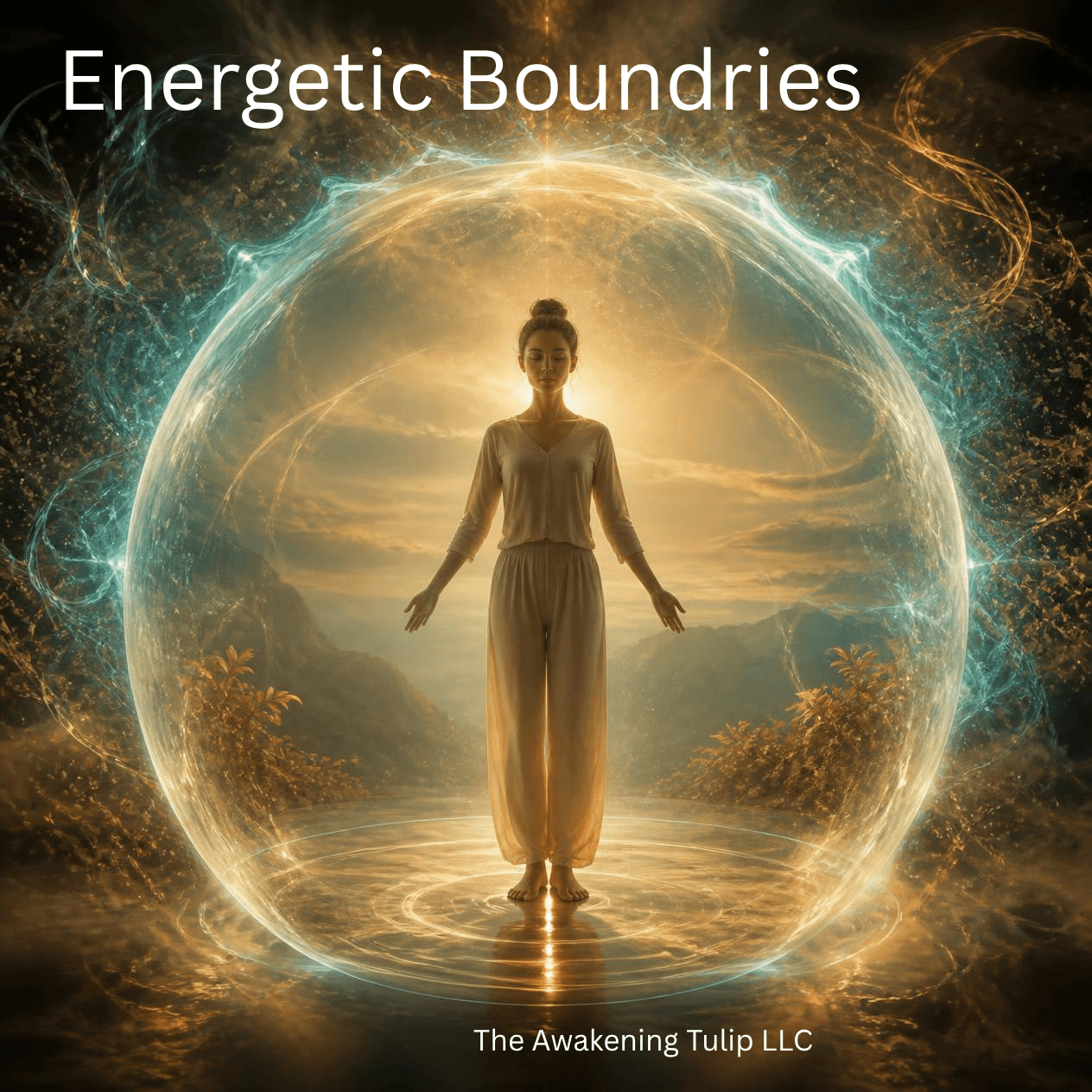
  • Set the intention that this shield acts like a semi-permeable membrane: unconditional love, joy, and truth can flow in and out freely, but density, projections, and ungrounded fear bounce off and dissolve.

3. The Energetic Cord Release

When we share deep intimacy or endure frequent conflict, invisible energetic cords link our energy centers (usually the solar plexus or heart).

  • At the end of each day, sit quietly in meditation.
  • Visualize any heavy or draining cords connecting you to others.
  • Picture a blade of pure crystalline light gently dissolving these attachments at their roots.
  • Affirm: “I lovingly detach from all cords of co-dependence, obligation, and fear. I call my complete energy back into my sovereign vessel.”

4. Elemental Grounding (Water & Salt Clearing)

Water is one of the most potent energetic conductors and purifiers available:

  • The Ritual Bath or Shower: Take a warm shower with the conscious awareness that the water is rinsing away emotional residue. Use coarse sea salt or Epsom salt with rosemary or eucalyptus essential oil as an aura-cleansing scrub.
  • Barefoot Grounding: Stand barefoot on the soil, grass, or sand for 10 minutes to allow the Earth to absorb and neutralize excess emotional charge.

5. Clear, Compassionate Edge-Setting

Spiritual boundaries must ultimately manifest as practical boundaries. If an interaction begins to cross into an emotional dumping ground, you have the spiritual right to redirect the space:

  • “I care about you deeply and want to support you, but I don’t have the emotional capacity to process this right now. Can we talk about it tomorrow?”
  • Setting a boundary is not a rejection of the other person; it is an invitation to relate in a healthier, more sustainable way.

Spiritual Sovereignty Is an Act of Love

There is a common misconception that loving deeply means merging completely. Yet, the strongest relationships are formed by two whole, integrated beings who stand side-by-side—like two trees sharing the same sunlight and soil, but keeping their own root systems intact.

When you protect your spiritual space, you are not withholding love; you are purifying the vessel through which love flows. By taking responsibility for your own energetic vibration, you create a calm, clear sanctuary that invites others to rise into their own healing and sovereignty.


Reflection Prompt

Take a quiet moment today to reflect: Which relationship in your life currently leaves you feeling most depleted, and what is one small boundary or ritual you can put in place to reclaim your peace?

Creating Energetic Boundaries That Actually Work

Have you ever walked away from a conversation, a meeting, or even a casual gathering feeling completely drained—even if nothing overtly dramatic happened?

When people talk about “energy,” it often gets wrapped up in abstract concepts. In day-to-day life, your energy simply refers to your finite reserves: your attention, emotional bandwidth, nervous system capacity, and focus.

When you don’t have clear boundaries around those reserves, you end up operating on empty, absorbing other people’s stress, and feeling perpetually depleted. Here is what creating energetic boundaries really means in practice, and how to build habits that protect your daily well-being.


What Does an “Energetic Boundary” Really Mean?

An energetic boundary isn’t a mystical wall or an attempt to control the behavior of others. Rather, it is an internal filter and a set of practical behavioral habits that determine:

  1. What you let in: How deeply you internalize other people’s emotional states, urgency, or negativity.
  2. What you give out: How much time, emotional labor, and attention you offer before checking in with your own needs.

Without functional boundaries, empathy easily transforms into emotional overload.


4 Practical Steps to Build Boundaries That Hold

1. Identify Your Warning Signals

Boundaries cannot be enforced if you only notice they have been crossed after you are already exhausted. Pay attention to early physical and emotional cues:

  • A tightening in your chest or jaw during certain interactions.
  • An immediate urge to fix someone else’s distress to relieve your own discomfort.
  • Chronic fatigue or irritability after specific recurring commitments.

Recognizing these cues gives you the pause you need to choose your response rather than react on autopilot.

2. Practice Emotional Differentiation

It is possible to be deeply compassionate without taking ownership of another person’s emotional state. When someone around you is anxious, angry, or venting:

  • Remind yourself: “This is their experience to navigate; it is not mine to absorb or fix.”
  • Offer listening and support if you have the capacity, but avoid jumping into unsolicited problem-solving or taking on the burden of their mood.

3. Build Intentional Buffer Zones

Energy leaks frequently happen in the spaces between activities. When you rush continuously from a high-stress meeting to a family dinner without a break, you carry leftover tension with you.

  • The 5-minute transition: Take five quiet minutes between tasks or before walking into your home. Put your phone away, take a few steady breaths, and reset your attention.
  • Digital limits: Turn off non-essential notifications. Every ping requests a fraction of your mental energy.

4. Use Clear, Low-Friction Language

Setting limits does not require elaborate explanations or conflict. Simple, neutral communication works best:

  • “I care about what you’re going through, but I don’t have the mental space to give this the focus it deserves right now. Can we talk about it tomorrow?”
  • “I won’t be able to take on this project right now, but thank you for thinking of me.”
  • “I need a quiet evening to recharge, so I’m going to pass on tonight.”

The Takeaway

Creating energetic boundaries isn’t about shutting the world out; it’s about making conscious choices with where your limited time and attention go. By developing self-awareness and practical communication habits, you can show up for the things and people that truly matter without sacrificing your own peace of mind.

How to Release Scarcity and Step Into Abundance

Do you ever feel like you’re running a race where the finish line keeps moving? Or perhaps you find yourself looking at others’ success and feeling a pang of “if they have it, there’s less for me.”

This is the scarcity mindset—the belief that resources (time, money, love, or opportunity) are limited. In 2026, with the rapid pace of AI and global change, it’s easier than ever to fall into this trap. However, scarcity isn’t a fact; it’s a filter. When you change the filter, you change your reality.

Stepping into abundance is about realizing that life isn’t a zero-sum game. Here is how to dismantle the “lack” narrative and start living in a state of flow.

1. Identify Your “Scarcity Scripts”

You cannot change what you haven’t acknowledged. Scarcity often hides in our daily dialogue:

  • “I’ll never have enough time for this.”
  • “Opportunities like that don’t happen for people like me.”
  • “I have to hold onto this money tightly because I don’t know when more is coming.”

The Shift: Awareness is the first step toward neuroplasticity. When you catch these thoughts, pause and ask: “Is this absolutely true, or is this just a story I’m telling?”

2. Practice “Active” Gratitude (Not Toxic Gratitude)

By now, we all know gratitude is key. But in 2026, the trend has shifted toward Active Gratitude. This isn’t just listing things you’re “supposed” to be thankful for to mask your pain (toxic gratitude). It’s about deeply feeling the abundance in what you currently possess.

  • Try the “Three Good Things” Exercise: Every evening, write down three things that went well and why they happened. This trains your brain to look for patterns of success rather than patterns of lack.

3. Reframe Debt and Expenses as “Investments”

One of the hardest places to feel abundant is when paying bills. However, if you view every payment with resentment, you reinforce a “lack” vibration.

  • The Shift: Before you click “pay,” close your eyes and say: “I am grateful for the service this money provided. There is more where this came from.” Rebrand your student loans as “investments in my brilliance” and your rent as “gratitude for my safe sanctuary.”

4. Move on “Micro-Actions”

Abundance is a muscle. You don’t need a million dollars to act abundantly; you need to prove to your nervous system that you are safe to give.

  • Generosity: Celebrate a competitor’s win. Share a helpful resource without being asked.
  • Treats: Buy yourself the “good” coffee or take an extra 20 minutes for a walk. These small acts signal to your brain that you are a person who lives in “enough-ness.”

5. Master Your Attention and Intention

In 2026, your attention is your most valuable currency. If you spend it on doom-scrolling or comparison, you are literally spending your abundance.

  • Visualization: Spend 5 minutes every morning visualizing your “abundant self.” Don’t just see the money or the house; feel the ease in your body. When you embody the feeling of abundance, your brain begins to filter for opportunities that match that frequency.

The Bottom Line

Releasing scarcity isn’t a one-time event; it’s a daily practice of choosing to see the “limitless ocean” instead of the “limited pie.” When you step into abundance, you don’t just change your bank account—you change the way you show up for the world.


How to Reparent Yourself with Compassion and Love

Have you ever reacted to a small mistake with intense self-criticism? Or felt a surge of overwhelming anxiety when someone didn’t reply to your text immediately? Often, these reactions aren’t just about the present—they are the voices of our “inner child” seeking the safety and validation they didn’t receive years ago.
Reparenting is the transformative process of becoming the loving, stable parent for yourself that you may have missed out on during childhood. It isn’t about blaming the past; it’s about taking responsibility for your healing today.
Here is how you can begin reparenting yourself with deep compassion and love.

  1. Acknowledge Your Inner Child
    The first step in reparenting is awareness. Your inner child is the part of your subconscious that holds your childhood memories, emotions, and unmet needs.
    Practice: When you feel triggered or “small,” stop and ask: “How old do I feel right now?” Identifying that a 6-year-old version of you is feeling scared or ignored allows you to separate your adult self from the intense emotion.
  2. Practice Compassionate Self-Talk
    Many of us grew up with parents who were critical, dismissive, or simply absent. We often internalize those voices as our own. Reparenting requires you to consciously replace that “inner critic” with a “nurturing parent.”
    Try these affirmations:
    “I see that you’re hurting right now, and I’m right here with you.”
    “It’s okay to make mistakes. We’re learning together.”
    “You are safe now. I will protect you.”
  3. Establish Healthy Boundaries
    A good parent provides a “secure base” by setting limits that keep a child safe. As an adult, this means setting boundaries with others—and yourself.
    Self-Protection: Learn to say “no” to things that drain your energy or trigger old wounds.
    Self-Discipline: Reparenting isn’t just about “treating yourself.” It’s also about the loving discipline of going to bed on time, eating nourishing food, and keeping your living space clean because you deserve to live in a healthy environment.
  4. Create Emotional Safety Rituals
    If you grew up in an environment that felt chaotic or emotionally unpredictable, you likely learned to live in “survival mode.” Reparenting involves teaching your nervous system that it is finally safe to relax.
    Soothing Activities: When you feel overwhelmed, try “weighted” items like a heavy blanket, gentle humming (which stimulates the vagus nerve), or placing a hand over your heart and breathing deeply. These physical cues tell your body that the “adult you” has everything under control.
  5. Celebrate Your Progress
    A loving parent celebrates even the smallest wins. To reparent yourself effectively, you must stop waiting for external validation and start giving it to yourself.
    The “Cheerleader” Voice: Did you handle a difficult conversation well? Did you choose a healthy meal when you were stressed? Acknowledge it. Tell yourself, “I’m really proud of how you handled that today.”
    Final Thoughts
    Reparenting is not a one-time event; it is a daily practice of showing up.There will be days when the old patterns return, and that is okay. The goal isn’t perfection—it’s presence. By choosing to meet your own needs with love, you aren’t just healing your past; you are building a more resilient, compassionate future.

Reclaiming Your Joy

A Guide to Recognizing and Healing Inner Child Wounds

Have you ever reacted to a minor inconvenience with unexplained intensity? Or perhaps you find yourself stuck in a cycle of people-pleasing, even when it leaves you exhausted?

Oftentimes, our adult “overreactions” aren’t actually about the present moment. They are echoes from the past. Behind the mask of our adult selves lives our inner child—the part of our subconscious that retains the memories, emotions, and beliefs we formed during our earliest years.

When that child is wounded, they continue to run the show from behind the scenes. Today, we’re diving into the transformative journey of emotional healing and how you can begin healing inner child wounds to live a more authentic, peaceful life.


What Exactly is the “Inner Child”?

The inner child is not a literal child living inside you; it is a psychological metaphor. It represents the sum of your childhood experiences—both the joyful ones and the painful ones.

If your needs for safety, love, and validation weren’t fully met as a child, you likely developed “wounds.” These wounds act like filters through which you see the world today. Inner child work is the process of accessing those parts of yourself to provide the comfort and security you didn’t receive back then.

Common Signs of Inner Child Wounds

Recognizing that you have healing to do is the first step. Inner child wounds often manifest in adulthood as:

  • Fear of Abandonment: An intense anxiety that friends or partners will leave you.
  • People-Pleasing: Sacrificing your own needs to keep the peace or gain approval.
  • Poor Boundaries: Difficulty saying “no” or allowing others to mistreat you.
  • Self-Criticism: A loud internal voice that tells you that you aren’t “good enough.”
  • Emotional Volatility: Getting “triggered” easily and feeling a loss of control over your reactions.
  • Self-Sabotage: Pushing away good things because you subconsciously feel you don’t deserve them.

Steps for Healing Inner Child Wounds

Healing is not about changing the past; it’s about changing your relationship with it. Here are four foundational steps to start your journey:

1. Awareness and Acknowledgment

You cannot heal what you refuse to see. Start by noticing when you feel “small” or “defensive.” Ask yourself: “How old do I feel right now?” Often, when we are triggered, we are reacting from the age at which the original wound occurred. Acknowledge that younger version of you with compassion rather than judgment.

2. Practice “Reparenting”

Reparenting is the core of emotional healing. It involves giving yourself the love, discipline, and affirmations you needed as a child.

  • The Affirmation: “I am safe now. I am loved. I am enough exactly as I am.”
  • The Action: Setting a regular bedtime, eating nourishing food, or protecting your time are all acts of reparenting that signal safety to your inner child.

3. Safe Expression through Journaling

Write a letter to your inner child. Ask them how they feel and what they are afraid of. Then, write back from your “Wise Adult” self. This dialogue helps bridge the gap between your past pain and your present strength.

4. Embrace the Power of Play

Wounded children often had to grow up too fast. Healing inner child wounds involves reclaiming the joy of play. Do something “pointless” but fun—paint, dance in your kitchen, build something with LEGOs, or run through the grass. Play tells your inner child that life doesn’t always have to be a struggle for survival.

The Path to Emotional Freedom

Healing inner child wounds is not a linear process. There will be days when you feel incredibly grounded and days when old patterns resurface. That is okay.

The goal of inner child work is not to reach a “perfect” state, but to build a relationship with yourself based on trust and kindness. As you begin to heal, you’ll find that you are no longer reacting to life from a place of lack, but responding to it from a place of wholeness.

Are you ready to start your healing journey? Remember: It is never too late to have a happy childhood. You have the power to be the person your younger self always needed.

Practices for Self-Acceptance & Heart-Centered Living

Heart-centered living means making choices based on love and intuition rather than fear or societal “shoulds.” This requires radical self-acceptance—the ability to look at every part of yourself, including the messy bits, and say, “You belong here, too.”

How to live more from your heart:

  • The Morning Alignment: Before checking your phone, ask your heart: “What do you need today?” Listen to the first whisper that comes up.
  • Release the “Shoulds”: Write down three things you feel you “should” do. Cross them out and replace them with what feels expansive and true to your values.
  • Breathwork for Acceptance: Inhale “I accept,” and exhale “I let go.”

The Art of Embodying Self-Love & Compassion

Embodying self-love isn’t about a one-time bubble bath; it’s a commitment to how you treat yourself in your darkest moments. Often, we are our own harshest judges. To embody compassion, we must start by “witnessing” our pain without trying to fix it immediately.

Three core practices to start this week:

  1. The Compassion Break: When you feel stressed, pause, place a hand over your heart, and say: “This is a moment of suffering. Suffering is part of life. May I be kind to myself in this moment.”
  2. The “Friend Test”: Before you speak to yourself, ask: “Would I say this to a dear friend?” If the answer is no, rephrase it with kindness.
  3. Mindful Awareness: Simply label your feelings. Instead of “I am a failure,” try “I am noticing a feeling of disappointment.”

Social Media Post:
Self-love isn’t a destination; it’s the way you walk the path. 🌿 This week, we’re diving into the foundations of radical self-compassion. It starts with one kind thought at a time. Read the full guide on the blog!
#SelfLoveJourney #SelfCompassion #MindfulLiving #InnerPeace #WellnessTips

Exploring Reiki, EFT, and Sound Healing for Spiritual Growth

The world of energy healing is vast, and it can be overwhelming to know where to start. If you’re looking to accelerate your spiritual growth, three of the most effective and accessible modalities are Reiki, EFT, and Sound Healing.

1. Reiki: The Gentle Flow
Reiki is a Japanese technique for stress reduction and relaxation that also promotes healing. A practitioner channels “Universal Life Force Energy” into the client. It’s perfect for those seeking deep peace and emotional clearing without having to “talk through” their issues.

2. EFT (Emotional Freedom Technique): The Tapping Reset
EFT combines ancient Chinese acupressure with modern psychology. By tapping on specific meridian points while focusing on a problem, you can “short-circuit” the body’s stress response. It is an incredible tool for overcoming phobias, anxiety, and limiting beliefs.

3. Sound Healing: The Frequency Shift
Everything in the universe is in a state of vibration. Sound healing uses tools like singing bowls, gongs, or tuning forks to bathe your cells in high-frequency vibrations. This helps synchronize your brainwaves and release blockages in the subtle body.

Which one should you choose? Listen to your intuition. Often, the modality that “sounds” the most intriguing is the one your energy field is currently vibrating toward.

Embodied Mindfulness & Daily Rituals for Minimalist Living

In our fast-paced, digitally saturated world, we often live “from the neck up.” We process endless streams of data, manage overflowing to-do lists, and navigate a sea of physical clutter, all while losing touch with the physical vessel that carries us through it all: our bodies.

True minimalist living isn’t just about owning fewer things; it’s about creating space for embodied mindfulness. When we pair the external simplicity of minimalism with the internal grounding of daily rituals, we don’t just “clear the room”—we clear the mind and regulate the soul.

What is Embodied Mindfulness?

While traditional mindfulness often focuses on observing thoughts, embodied mindfulness invites you to feel the “felt sense” of the present moment. It is the practice of noticing the weight of your feet on the floor, the temperature of the air on your skin, and the subtle rise and fall of your chest.

In a minimalist home, this becomes easier. Without the visual “noise” of excess possessions, your nervous system can finally downshift, allowing you to tune into your body’s internal signals.

Why Rituals Matter in a Minimalist Life

A habit is something you do on autopilot (like brushing your teeth). A ritual is a habit elevated by intention. Rituals are the anchors of mindful living; they turn mundane tasks into moments of sacred connection. By simplifying your life through minimalism, you remove the “friction” of excess, making it easier to maintain these soul-nourishing practices.


3 Embodied Rituals to Ground Your Daily Life

To begin your journey into mindful living, try incorporating these three rituals that focus on the physical experience of being alive.

1. The Sensory Morning Brew

Instead of scrolling through news while gulping down coffee, turn your morning caffeine (or tea) into a sensory ritual.

  • The Embodied Practice: Feel the warmth of the ceramic mug against your palms. Inhale the steam deeply, noticing the exact notes of the aroma. As you take a sip, follow the sensation of the liquid moving down your throat. This 5-minute ritual tells your nervous system that you are safe and present.

2. The “Touchstone” Transition

Minimalism emphasizes the importance of your environment. Use a physical object in your home—perhaps a smooth stone, a wooden table, or a linen curtain—as a mindfulness touchstone.

  • The Embodied Practice: Every time you pass this object, stop and touch it. Notice the texture—is it rough, cool, or soft? Take one deep breath while maintaining physical contact. This “micro-ritual” breaks the cycle of mental “brain rot” and pulls you back into the physical world.

3. The Evening Decompression Scan

As you prepare for sleep, use the minimalist principle of “clearing the deck” for your body.

  • The Embodied Practice: While lying in bed, perform a mental scan from your toes to your head. Instead of just thinking about your body, feel the heavy support of the mattress beneath you. If you notice tension in your jaw or shoulders, don’t just “fix” it—breathe into it and let the sensation dissolve.

Minimalism in 2026: The Shift to “Welcoming Minimalism”

As we look toward the future of mindful living, the trend is shifting away from cold, clinical minimalism toward “Welcoming Minimalism.” This approach focuses on:

  • Organic Textures: Using wood, stone, and natural fibers that provide “sensory feedback” to the body.
  • Curated Essence: Keeping only the items that serve a functional purpose or provide a deep, visceral sense of joy.
  • Soft Boundaries: Using lighting and scent to create “ritually-zoned” spaces for rest and work.

Final Thoughts

Embodied mindfulness and daily rituals are the “how-to” of minimalist living. When you remove the excess from your life, you aren’t just left with an empty room; you are left with the space to finally inhabit your own body.

Start small. Pick one ritual. Feel one sensation. And watch how a simplified life becomes a deeply felt one.


Ready to simplify?
Which daily ritual will you start tomorrow? Let us know in the comments below!

Cultivating Daily Spiritual Awareness

In a world that often feels “wired but tired,” the spiritual conversation of 2026 has shifted. We are moving away from the era of “optimization overload”—where we tracked every heartbeat and optimized every calorie—and toward a deeper, more grounded state of being.

The next step in our collective evolution isn’t about knowing more; it’s about living what we know in our bodies. This is the essence of embodied mindfulness. It is the practice of bringing spiritual awareness down from the clouds and into our bones, breath, and daily actions.

What is Embodied Mindfulness?

Traditional mindfulness often focuses on the mind—observing thoughts and staying present. Embodied mindfulness takes this a step further. It is the integration of awareness with the physical self. Instead of just thinking about being calm, you learn to feel safety in your nervous system.

When we are embodied, we aren’t just “living from the neck up.” We are tuned into the subtle signals of the body: the rhythm of our breath, the tension in our shoulders, and the “gut feelings” that guide our intuition. This connection is the ultimate bridge to spiritual awareness.

The Power of Daily Rituals as Anchors

If mindfulness is the “what,” rituals are the “how.” In the energetic climate of 2026, rituals have become our essential anchors. They are not rigid chores, but “wellness snacks”—small, intentional moments that signal to our brain and spirit that we are safe, present, and connected.

By turning mundane habits into sacred rituals, we create a “spiritual nervous system” that can withstand the acceleration and change of modern life.

3 Rituals to Cultivate Spiritual Awareness Today

1. The Morning “Vagal” Greeting

Before you reach for your phone, reach for your breath. A major trend this year is focusing on vagal tone—the health of your vagus nerve.

  • The Ritual: Place one hand on your heart and one on your belly. Take three deep “coherent breaths” (inhaling for 5 seconds, exhaling for 5). As you breathe, notice the physical sensation of your hands moving.
  • The Spiritual Shift: This signals to your body that your presence is the first and most important “input” of the day, grounding your spirit before the digital world intervenes.

2. Midday Sensation Resets

Midday is often when our attention fractures. Instead of pushing through “brain rot,” use a sensory ritual to return to the now.

  • The Ritual: Engage in a “3-2-1 Sensory Scan.” Stop what you are doing and identify 3 things you can feel (the chair against your legs, the air on your skin), 2 things you can hear, and 1 scent or taste.
  • The Spiritual Shift: This pulls your consciousness out of “time-traveling” (worrying about the future or past) and back into the only place spirituality actually exists: the present moment.

3. Evening Nervous System Downregulation

In 2026, rest is no longer optional; it is foundational. An evening ritual helps process the day’s “emotional charge.”

  • The Ritual: Try a magnesium soak or warm foot bath paired with light journaling. Write down one thing you are releasing from today and one intention for rest.
  • The Spiritual Shift: This acts as a closing ceremony for your day, allowing your spirit to detach from “doing” so it can simply “be” during sleep.

The Benefits: Why Embodiment Matters

When you commit to embodied mindfulness and daily rituals, the benefits transcend simple stress relief:

  • Clarity over Reactivity: You learn to respond to life from a place of centeredness rather than reacting from a place of triggers.
  • Deeper Intuition: By listening to the body’s wisdom, you gain access to a “deeper knowing” that logic alone cannot provide.
  • Sustainable Resilience: You build a nervous system that can handle the highs and lows of life without burning out.

Final Thoughts: Start Where You Are

Cultivating daily spiritual awareness doesn’t require a Himalayan retreat or a two-hour meditation practice. It requires the courage to slow down and inhabit your own skin.

Choose one ritual this week. Don’t worry about doing it perfectly—simply focus on feeling it. Your body is the temple of your spirit; it’s time to come home to it.


Ready to dive deeper? Explore our guide on Nervous System Regulation for 2026.

0
0
Your Cart
Your cart is emptyReturn to Shop