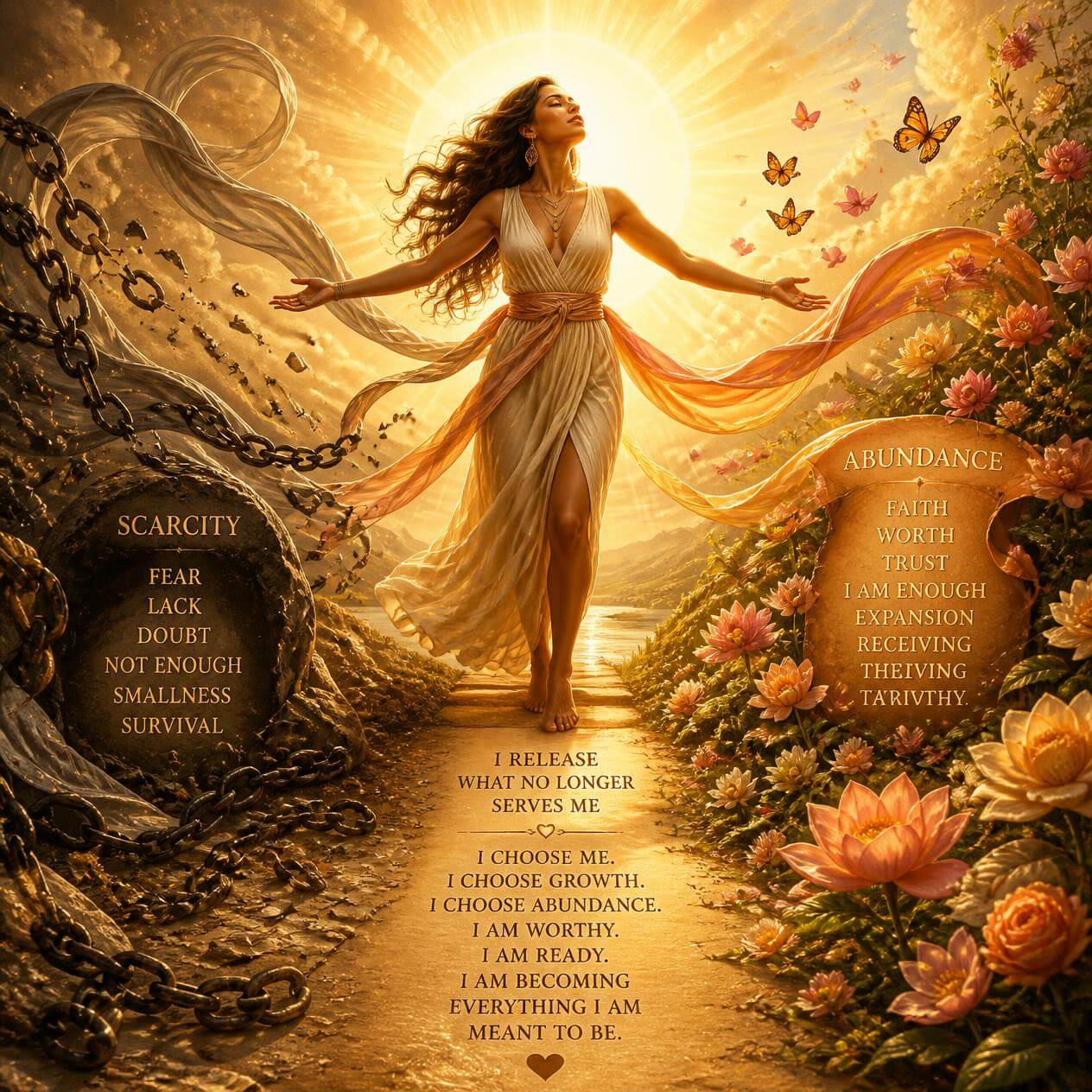

Grounding with Earth Energy

As the veil thins and the Earth bursts into full bloom this May 1st, we find ourselves at the peak of the spring fire. With the Full Flower Moon in Scorpio coinciding with Beltane, the energy is electric, passionate, and perhaps a little overwhelming. To navigate this “Blue Moon month,” we must first learn to stand still.

Grounding (or “Earthing”) is the practice of reconnecting your physical and energetic body to the Earth’s frequency. This week, as the sap rises in the trees, try these three methods to stay rooted:

  1. Barefoot Connection: Spend 10 minutes walking on grass or soil. Feel the literal exchange of electrons as the Earth neutralizes your stress.
  2. The Root Meditation: Visualize roots extending from the base of your spine deep into the tectonic plates, anchoring you through the Scorpio moon’s emotional waves.
  3. Tending the Soil: Physically get your hands in the dirt. Whether it’s a garden or a windowsill pot, the microbes in the soil are natural antidepressants that tether you to the “now.”

Weekly Affirmation: “I am rooted in the deep wisdom of the Earth. I am stable, I am safe, and I am home.”

How to Strengthen Your Ability to Sense Energy

You don’t need to be “born with a gift” to sense energy. Just like a muscle, your energetic sensitivity can be developed through practice and intention. Sensing energy—often called clairsentience—allows you to navigate the world with greater intuition and awareness.

Exercises to Strengthen Your “Energetic Muscles”:

1. The Energy Ball (Psi Ball)
Rub your palms together vigorously for 20 seconds to create friction. Slowly pull them apart, then bring them back together without touching. Do you feel a push, a pull, a tingle, or warmth? That’s your own energy field!

2. Scanning Your Plants
Place your hand a few inches above a living plant. Gently move your hand up and down. Notice if the “density” of the air changes as you get closer to the leaves. Plants have vibrant, easy-to-sense auras.

3. The Room Scan
When you enter a room, before you look at the decor, close your eyes. Notice the “temperature” of the room. Does it feel heavy, light, stagnant, or buzzing? Trust your first instinct.

4. Mindfulness and Silence
The “volume” of subtle energy is low. To hear it, you must turn down the volume of the physical world. A daily 5-minute meditation builds the sensitivity required to notice subtle shifts in your environment.

By practicing these steps, you’ll move from “thinking” about energy to “knowing” it.

Exploring Reiki, EFT, and Sound Healing for Spiritual Growth

The world of energy healing is vast, and it can be overwhelming to know where to start. If you’re looking to accelerate your spiritual growth, three of the most effective and accessible modalities are Reiki, EFT, and Sound Healing.

1. Reiki: The Gentle Flow
Reiki is a Japanese technique for stress reduction and relaxation that also promotes healing. A practitioner channels “Universal Life Force Energy” into the client. It’s perfect for those seeking deep peace and emotional clearing without having to “talk through” their issues.

2. EFT (Emotional Freedom Technique): The Tapping Reset
EFT combines ancient Chinese acupressure with modern psychology. By tapping on specific meridian points while focusing on a problem, you can “short-circuit” the body’s stress response. It is an incredible tool for overcoming phobias, anxiety, and limiting beliefs.

3. Sound Healing: The Frequency Shift
Everything in the universe is in a state of vibration. Sound healing uses tools like singing bowls, gongs, or tuning forks to bathe your cells in high-frequency vibrations. This helps synchronize your brainwaves and release blockages in the subtle body.

Which one should you choose? Listen to your intuition. Often, the modality that “sounds” the most intriguing is the one your energy field is currently vibrating toward.

5 Signs of Energy Leaks and How to Repair Them

Do you ever feel completely exhausted after a quick trip to the grocery store or a short conversation with a specific friend? This isn’t just physical tiredness; it’s often a sign of an “energy leak.” An energy leak occurs when your aura has “holes” or weak spots, allowing your vital force to drain out and external stressors to seep in.

5 Signs You Have an Energy Leak:

  1. Chronic Fatigue: You wake up tired even after a full night’s sleep.
  2. Easily Triggered: You find yourself unusually irritable or reactive to small inconveniences.
  3. Feeling “Slimy” or Heavy: After being in a crowd, you feel like you’ve picked up “weight” that isn’t yours.
  4. Inability to Focus: Your mind feels scattered and you can’t stay present.
  5. Physical Tension: Recurring tightness in the neck, shoulders, or solar plexus.

How to Repair Your Energy Field:

  • The Golden Egg Visualization: Close your eyes and imagine a bright, golden light surrounding you, sealing any cracks in your aura.
  • Salt Baths: Sea salt is a natural cleanser for the subtle body. A 20-minute soak can “reset” your field.
  • Cord Cutting: Consciously intend to release energetic ties to people or situations that drain you.
  • Boundaries: Sometimes the best repair is saying “no” to things that deplete your spirit.

Understanding Your Energy Field

Energy Spirituality

A Beginner’s Guide to Auras

Have you ever walked into a room and immediately felt someone’s “vibe” before they even spoke? That is your first encounter with an aura. An aura is the electromagnetic energy field that surrounds every living being. It is a luminous cloud of energy that reflects your physical health, emotional state, and spiritual well-being.

The Layers of Your Aura:
The aura isn’t just one big bubble; it’s made of several layers:

  1. The Etheric Body (Physical Layer): Closest to the skin, reflecting our physical health.
  2. The Emotional Layer: Where we hold our feelings and moods.
  3. The Mental Layer: The space of thoughts, ideas, and cognitive processes.
  4. The Spiritual Layers: Higher vibrations that connect us to the divine and our soul’s purpose.

What Do the Colors Mean?
While auras are constantly shifting, certain colors often dominate:

  • Blue: Calm, communicative, and intuitive.
  • Green: Healing, growth, and a love for nature.
  • Yellow: Playful, intelligent, and confident.
  • Red: Grounded, energetic, or sometimes indicative of anger.

Learning to understand your aura is the first step in taking control of your spiritual health. When your aura is bright and clear, you feel vibrant and protected. When it’s “muddy,” you may feel sluggish or disconnected.

Embodied Mindfulness & Daily Rituals for Minimalist Living

In our fast-paced, digitally saturated world, we often live “from the neck up.” We process endless streams of data, manage overflowing to-do lists, and navigate a sea of physical clutter, all while losing touch with the physical vessel that carries us through it all: our bodies.

True minimalist living isn’t just about owning fewer things; it’s about creating space for embodied mindfulness. When we pair the external simplicity of minimalism with the internal grounding of daily rituals, we don’t just “clear the room”—we clear the mind and regulate the soul.

What is Embodied Mindfulness?

While traditional mindfulness often focuses on observing thoughts, embodied mindfulness invites you to feel the “felt sense” of the present moment. It is the practice of noticing the weight of your feet on the floor, the temperature of the air on your skin, and the subtle rise and fall of your chest.

In a minimalist home, this becomes easier. Without the visual “noise” of excess possessions, your nervous system can finally downshift, allowing you to tune into your body’s internal signals.

Why Rituals Matter in a Minimalist Life

A habit is something you do on autopilot (like brushing your teeth). A ritual is a habit elevated by intention. Rituals are the anchors of mindful living; they turn mundane tasks into moments of sacred connection. By simplifying your life through minimalism, you remove the “friction” of excess, making it easier to maintain these soul-nourishing practices.


3 Embodied Rituals to Ground Your Daily Life

To begin your journey into mindful living, try incorporating these three rituals that focus on the physical experience of being alive.

1. The Sensory Morning Brew

Instead of scrolling through news while gulping down coffee, turn your morning caffeine (or tea) into a sensory ritual.

  • The Embodied Practice: Feel the warmth of the ceramic mug against your palms. Inhale the steam deeply, noticing the exact notes of the aroma. As you take a sip, follow the sensation of the liquid moving down your throat. This 5-minute ritual tells your nervous system that you are safe and present.

2. The “Touchstone” Transition

Minimalism emphasizes the importance of your environment. Use a physical object in your home—perhaps a smooth stone, a wooden table, or a linen curtain—as a mindfulness touchstone.

  • The Embodied Practice: Every time you pass this object, stop and touch it. Notice the texture—is it rough, cool, or soft? Take one deep breath while maintaining physical contact. This “micro-ritual” breaks the cycle of mental “brain rot” and pulls you back into the physical world.

3. The Evening Decompression Scan

As you prepare for sleep, use the minimalist principle of “clearing the deck” for your body.

  • The Embodied Practice: While lying in bed, perform a mental scan from your toes to your head. Instead of just thinking about your body, feel the heavy support of the mattress beneath you. If you notice tension in your jaw or shoulders, don’t just “fix” it—breathe into it and let the sensation dissolve.

Minimalism in 2026: The Shift to “Welcoming Minimalism”

As we look toward the future of mindful living, the trend is shifting away from cold, clinical minimalism toward “Welcoming Minimalism.” This approach focuses on:

  • Organic Textures: Using wood, stone, and natural fibers that provide “sensory feedback” to the body.
  • Curated Essence: Keeping only the items that serve a functional purpose or provide a deep, visceral sense of joy.
  • Soft Boundaries: Using lighting and scent to create “ritually-zoned” spaces for rest and work.

Final Thoughts

Embodied mindfulness and daily rituals are the “how-to” of minimalist living. When you remove the excess from your life, you aren’t just left with an empty room; you are left with the space to finally inhabit your own body.

Start small. Pick one ritual. Feel one sensation. And watch how a simplified life becomes a deeply felt one.


Ready to simplify?
Which daily ritual will you start tomorrow? Let us know in the comments below!

Cultivating Daily Spiritual Awareness

In a world that often feels “wired but tired,” the spiritual conversation of 2026 has shifted. We are moving away from the era of “optimization overload”—where we tracked every heartbeat and optimized every calorie—and toward a deeper, more grounded state of being.

The next step in our collective evolution isn’t about knowing more; it’s about living what we know in our bodies. This is the essence of embodied mindfulness. It is the practice of bringing spiritual awareness down from the clouds and into our bones, breath, and daily actions.

What is Embodied Mindfulness?

Traditional mindfulness often focuses on the mind—observing thoughts and staying present. Embodied mindfulness takes this a step further. It is the integration of awareness with the physical self. Instead of just thinking about being calm, you learn to feel safety in your nervous system.

When we are embodied, we aren’t just “living from the neck up.” We are tuned into the subtle signals of the body: the rhythm of our breath, the tension in our shoulders, and the “gut feelings” that guide our intuition. This connection is the ultimate bridge to spiritual awareness.

The Power of Daily Rituals as Anchors

If mindfulness is the “what,” rituals are the “how.” In the energetic climate of 2026, rituals have become our essential anchors. They are not rigid chores, but “wellness snacks”—small, intentional moments that signal to our brain and spirit that we are safe, present, and connected.

By turning mundane habits into sacred rituals, we create a “spiritual nervous system” that can withstand the acceleration and change of modern life.

3 Rituals to Cultivate Spiritual Awareness Today

1. The Morning “Vagal” Greeting

Before you reach for your phone, reach for your breath. A major trend this year is focusing on vagal tone—the health of your vagus nerve.

  • The Ritual: Place one hand on your heart and one on your belly. Take three deep “coherent breaths” (inhaling for 5 seconds, exhaling for 5). As you breathe, notice the physical sensation of your hands moving.
  • The Spiritual Shift: This signals to your body that your presence is the first and most important “input” of the day, grounding your spirit before the digital world intervenes.

2. Midday Sensation Resets

Midday is often when our attention fractures. Instead of pushing through “brain rot,” use a sensory ritual to return to the now.

  • The Ritual: Engage in a “3-2-1 Sensory Scan.” Stop what you are doing and identify 3 things you can feel (the chair against your legs, the air on your skin), 2 things you can hear, and 1 scent or taste.
  • The Spiritual Shift: This pulls your consciousness out of “time-traveling” (worrying about the future or past) and back into the only place spirituality actually exists: the present moment.

3. Evening Nervous System Downregulation

In 2026, rest is no longer optional; it is foundational. An evening ritual helps process the day’s “emotional charge.”

  • The Ritual: Try a magnesium soak or warm foot bath paired with light journaling. Write down one thing you are releasing from today and one intention for rest.
  • The Spiritual Shift: This acts as a closing ceremony for your day, allowing your spirit to detach from “doing” so it can simply “be” during sleep.

The Benefits: Why Embodiment Matters

When you commit to embodied mindfulness and daily rituals, the benefits transcend simple stress relief:

  • Clarity over Reactivity: You learn to respond to life from a place of centeredness rather than reacting from a place of triggers.
  • Deeper Intuition: By listening to the body’s wisdom, you gain access to a “deeper knowing” that logic alone cannot provide.
  • Sustainable Resilience: You build a nervous system that can handle the highs and lows of life without burning out.

Final Thoughts: Start Where You Are

Cultivating daily spiritual awareness doesn’t require a Himalayan retreat or a two-hour meditation practice. It requires the courage to slow down and inhabit your own skin.

Choose one ritual this week. Don’t worry about doing it perfectly—simply focus on feeling it. Your body is the temple of your spirit; it’s time to come home to it.


Ready to dive deeper? Explore our guide on Nervous System Regulation for 2026.

From Head to Heart

A Guide to Embodied Mindfulness & Daily Rituals

In our fast-paced, digital-first world, it’s easy to live entirely “from the neck up.” We spend our days processing data, scrolling through feeds, and checking off to-do lists, often forgetting that we have a body until it sends us signals of pain or exhaustion.

Embodied mindfulness is the bridge back to ourselves. Unlike traditional mindfulness, which often focuses solely on observing thoughts, embodiment practices invite you to inhabit your physical form. By integrating daily rituals like breathwork and grounding, you can move from a state of constant “doing” into a state of present “being.”

What is Embodied Mindfulness?

Embodied mindfulness is the practice of staying present by tuning into the “felt sense” of your body. It’s the difference between thinking about being calm and feeling the weight of your body in your chair. When we practice embodiment, we tap into our body’s natural intelligence to regulate our nervous system, lower cortisol, and improve emotional resilience.

1. Breathwork: Your Internal Anchor

Your breath is the only part of your autonomic nervous system that you can consciously control. It is the fastest way to signal to your brain that you are safe.

The Ritual: The “Extended Exhale”

  • How to do it: Inhale through your nose for a count of 4. Pause briefly. Then, exhale through pursed lips (as if blowing through a straw) for a count of 6 or 8.
  • Why it works: Longer exhales activate the vagus nerve, which triggers the parasympathetic nervous system—your “rest and digest” mode.
  • Daily Integration: Practice this for 2 minutes before opening your laptop in the morning or while waiting in line.

2. Grounding: Reconnecting with the Earth

Grounding (or “earthing”) is the practice of physically or energetically connecting with the earth to stabilize your energy. In a world of high-frequency stress, grounding acts as a lightning rod for anxiety.

The Ritual: The “Feet-to-Floor” Check-in

  • How to do it: If possible, step outside barefoot on grass or soil. If you’re indoors, sit with both feet flat on the floor. Close your eyes and visualize roots growing from the soles of your feet deep into the earth. Notice the texture, temperature, and pressure.
  • Why it works: This practice shifts your awareness away from racing thoughts and down into your physical foundation, providing an immediate sense of stability.
  • Daily Integration: Make this your “transition ritual” when moving from work mode to home mode.

3. Creating Your Daily Rituals

A ritual is simply a routine infused with intention. To make embodied mindfulness and daily rituals stick, they don’t need to be long—they just need to be consistent.

  • Morning (The Awakening): Before checking your phone, place a hand on your heart and take three deep diaphragmatic breaths. Notice the rise and fall of your chest.
  • Mid-Day (The Reset): Use the “5-4-3-2-1” grounding technique. Acknowledge 5 things you see, 4 things you can touch, 3 things you hear, 2 things you can smell, and 1 thing you can taste.
  • Evening (The Release): Practice gentle somatic stretching or a “body scan” in bed. Start from your toes and work your way up, consciously releasing tension in each muscle group.

The Benefits of a Somatic Life

When you commit to these embodiment practices, the benefits extend far beyond a moment of “zen.” You’ll likely notice:

  • Reduced Anxiety: A more regulated nervous system.
  • Improved Focus: Less mental “clutter” and better presence.
  • Emotional Intelligence: A better understanding of how emotions manifest physically (e.g., a tight chest or a clenched jaw) before they overwhelm you.

Conclusion

Embodied mindfulness isn’t about achieving a perfect state of peace; it’s about coming home to yourself, over and over again. By weaving breathwork and grounding into your daily rituals, you transform your body from a vehicle for your head into a sanctuary for your soul.

Ready to start? Pick one practice—breathwork or grounding—and try it for just three minutes today. Your body will thank you.


Mindfulness for Emotional Regulation

In our fast-paced, screen-saturated world, it’s easy to live entirely “from the neck up.” We spend our days processing data, managing schedules, and navigating digital spaces, often forgetting that our emotions don’t just happen in our heads—they happen in our bodies.

When we lose touch with our physical selves, we lose our most effective tool for emotional regulation. This is where Embodied Mindfulness and Daily Rituals come in. By shifting from “thinking” about our feelings to “sensing” them, we can find a grounded calm that no amount of logic can provide.

What is Embodied Mindfulness?

Standard mindfulness often focuses on observing thoughts. Embodied mindfulness goes deeper: it is the practice of bringing non-judgmental awareness to your physical sensations.

Scientific research into interoception—our ability to sense the internal state of our bodies—shows that people with higher body awareness are better at regulating their emotions. When you can feel your chest tightening before you start shouting, or notice your breath becoming shallow before an anxiety attack peaks, you gain a window of opportunity to respond rather than react.

The Power of Daily Rituals as Nervous System Anchors

While a “habit” is something we do on autopilot (like brushing our teeth), a ritual is a habit infused with intention. Rituals act as anchors for the nervous system. They send cues of safety to the brain, telling it: “We are here. We are safe. We are in control.”

By combining embodied mindfulness with daily rituals, you create a “bottom-up” approach to emotional regulation—calming the brain by first calming the body.


3 Rituals to Regulate Your Emotions

Here are three simple, embodied rituals you can integrate into your day to help manage stress and find emotional balance.

1. The “Threshold Breath” (Transition Ritual)

We often carry the stress of one meeting or task into the next. To stop this “emotional bleeding,” choose a physical threshold—like your office door or the kitchen entrance.

  • The Practice: Every time you walk through that door, pause. Place one hand on your belly. Take one slow, deep breath, feeling the expansion of your ribs and the grounding of your feet on the floor.
  • Why it works: It breaks the “autopilot” cycle and resets your nervous system before you enter a new environment.

2. The 5-Sense Sensory Anchor (Grounding Ritual)

When emotions feel like a storm, your mind is usually in the past (regret) or the future (anxiety). You need to get back to the now.

  • The Practice: Stop what you are doing and name:
    • 5 things you can see (the texture of the wall, the light on a leaf).
    • 4 things you can touch (your clothes, the cool desk).
    • 3 things you can hear (distant traffic, your own breath).
    • 2 things you can smell.
    • 1 thing you can taste.
  • Why it works: It forces your brain to shift from the “Default Mode Network” (rumination) to the “Task Positive Network” (present-moment awareness).

3. The “Closing Ceremony” (Evening Ritual)

Many of us struggle with “bedtime procrastination” because we haven’t emotionally processed the day.

  • The Practice: At the end of your workday or before bed, perform a physical “closing.” This could be washing your hands with intention—feeling the water and “rinsing away” the day’s demands—or lighting a candle and blowing it out to signify that work-time is over.
  • Why it works: It creates a clear psychological and physical boundary, allowing your body to shift into “rest and digest” mode.

Tips for Making It Stick

  • Consistency over Intensity: You don’t need to meditate for an hour. A 30-second ritual performed daily is more effective for your brain than a 2-hour retreat once a year.
  • Name the Sensation: Instead of saying “I’m stressed,” try “I feel a buzzing in my hands and a weight on my shoulders.” Naming the physical sensation creates “emotional distance,” making the feeling easier to manage.
  • Be Kind to the Wanderer: Your mind will wander. That’s what minds do. The “magic” of mindfulness isn’t having a blank mind; it’s the moment you realize you’ve wandered and gently bring yourself back to your body.

Final Thoughts

Emotional regulation isn’t about “fixing” your feelings; it’s about building a bigger container to hold them. By practicing embodied mindfulness and honoring daily rituals, you stop being a passenger to your emotions and start becoming an anchored observer of your life.

Which of these rituals will you try today? Start small, stay in your body, and breathe.

The Art of Presence

Creating Sacred Routines through Embodied Mindfulness

We often move through our days on autopilot—brushing our teeth while mentally drafting emails, or drinking our morning coffee while scrolling through headlines. While these habits help us function, they rarely help us feel.

Embodied mindfulness rituals are the antidote to this modern “autopilot” living. By shifting from mindless habits to intentional, sensory-focused rituals, we can anchor ourselves in the present moment and create a life that feels as good on the inside as it looks on the outside.

Habit vs. Ritual: What’s the Difference?

habit is a mindless action we repeat for efficiency (e.g., locking the door). A ritual, however, is a mindful action performed with presence and purpose.

When you practice embodied mindfulness, you aren’t just “thinking” about being present; you are using your body—your breath, your senses, and your physical sensations—as a “home base” to experience the now.


AM Rituals: Waking Up with Presence

The way you greet the day sets the tone for your entire nervous system. Instead of rushing into “doing mode,” try these embodied morning rituals:

1. The “First Contact” Grounding

Before your feet even hit the floor, pause. As your eyes open, notice the light in the room. When you swing your legs out of bed, focus entirely on the sensation of your feet meeting the floor.

  • The Ritual: Stand still for 30 seconds. Feel the weight of your body pressing into the earth. Say a silent affirmation like, “I am here, and I am supported.”

2. The Sacred Brew

Whether it’s coffee, matcha, or herbal tea, turn your morning beverage into a sensory ceremony.

  • The Ritual: Listen to the water boiling. Feel the warmth of the mug against your palms. Breathe in the steam deeply before taking your first sip. Notice the temperature and texture as it moves through your body.

3. Somatic Joint Rotations

Stiffness from sleep is often trapped energy. Gently waking up your joints signals to your brain that it is safe to move.

  • The Ritual: Spend five minutes performing slow, circular movements with your wrists, ankles, neck, and hips. Close your eyes and “feel” the movement from the inside out rather than worrying about what it looks like.

PM Rituals: Closing the Day with Reverence

Evening rituals are about “reclaiming” your energy from the world and preparing your body for deep, restorative rest.

1. The Olfactory Reset (Scent Ritual)

Our sense of smell is directly linked to the emotional center of the brain. Use a specific scent to signal to your nervous system that “work time” is over.

  • The Ritual: Light a specific candle or use an essential oil (like lavender or sandalwood) only at night. As you inhale, visualize the day’s stress leaving your body with every exhale.

2. The “Mindful Unloading” Wash

Transform your evening shower or face-washing routine from a chore into a purification ritual.

  • The Ritual: As the water touches your skin, imagine it washing away the mental “to-do” lists and interactions of the day. Focus on the sensation of the water’s temperature and the scent of your soap as a way to return to your physical self.

3. The Bedtime Body Scan

Instead of scrolling until you fall asleep, practice a somatic check-in to release “issues in your tissues.”

  • The Ritual: Lying in bed, bring your awareness to your toes and slowly move up to the crown of your head. Notice where you are holding tension (often the jaw or shoulders) and consciously soften those areas.

Tips for Creating Your Own Sacred Routine

  • Start Small: Choose just one AM and one PM ritual to begin.
  • Use Sensory Anchors: Sight, sound, smell, and touch are your best tools for staying embodied.
  • Release Perfection: A ritual doesn’t have to be 30 minutes long. Even three mindful breaths while holding a warm cup of tea counts as a sacred act.

By integrating embodied mindfulness rituals into your daily life, you stop simply “surviving” your schedule and start inhabiting your life.

How will you turn one of your habits into a ritual today?

0
    0
    Your Cart
    Your cart is emptyReturn to Shop