Embodied Mindfulness & Daily Rituals for Minimalist Living
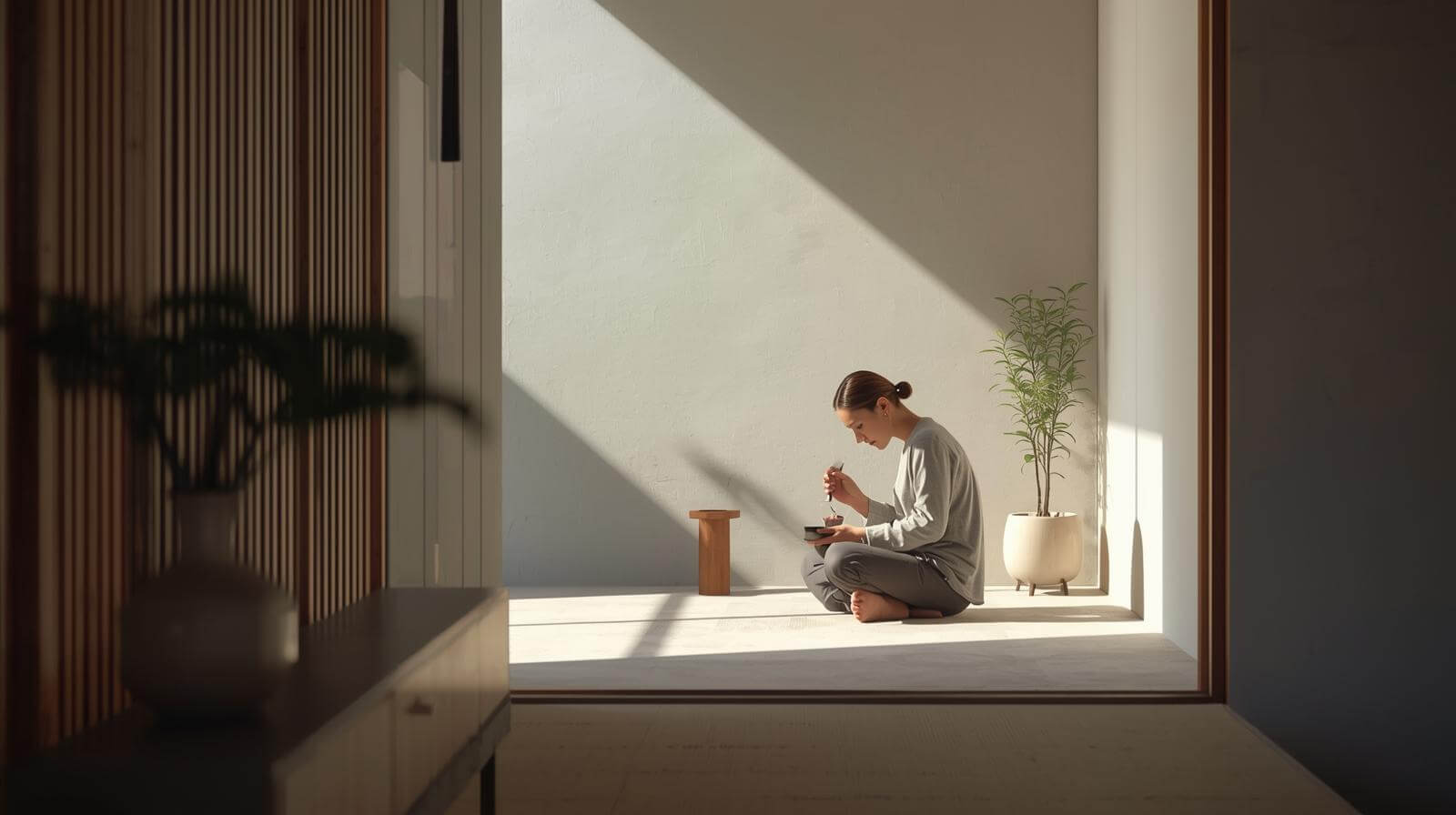
In our fast-paced, digitally saturated world, we often live “from the neck up.” We process endless streams of data, manage overflowing to-do lists, and navigate a sea of physical clutter, all while losing touch with the physical vessel that carries us through it all: our bodies.
True minimalist living isn’t just about owning fewer things; it’s about creating space for embodied mindfulness. When we pair the external simplicity of minimalism with the internal grounding of daily rituals, we don’t just “clear the room”—we clear the mind and regulate the soul.
What is Embodied Mindfulness?
While traditional mindfulness often focuses on observing thoughts, embodied mindfulness invites you to feel the “felt sense” of the present moment. It is the practice of noticing the weight of your feet on the floor, the temperature of the air on your skin, and the subtle rise and fall of your chest.
In a minimalist home, this becomes easier. Without the visual “noise” of excess possessions, your nervous system can finally downshift, allowing you to tune into your body’s internal signals.
Why Rituals Matter in a Minimalist Life
A habit is something you do on autopilot (like brushing your teeth). A ritual is a habit elevated by intention. Rituals are the anchors of mindful living; they turn mundane tasks into moments of sacred connection. By simplifying your life through minimalism, you remove the “friction” of excess, making it easier to maintain these soul-nourishing practices.
3 Embodied Rituals to Ground Your Daily Life
To begin your journey into mindful living, try incorporating these three rituals that focus on the physical experience of being alive.
1. The Sensory Morning Brew
Instead of scrolling through news while gulping down coffee, turn your morning caffeine (or tea) into a sensory ritual.
- The Embodied Practice: Feel the warmth of the ceramic mug against your palms. Inhale the steam deeply, noticing the exact notes of the aroma. As you take a sip, follow the sensation of the liquid moving down your throat. This 5-minute ritual tells your nervous system that you are safe and present.
2. The “Touchstone” Transition
Minimalism emphasizes the importance of your environment. Use a physical object in your home—perhaps a smooth stone, a wooden table, or a linen curtain—as a mindfulness touchstone.
- The Embodied Practice: Every time you pass this object, stop and touch it. Notice the texture—is it rough, cool, or soft? Take one deep breath while maintaining physical contact. This “micro-ritual” breaks the cycle of mental “brain rot” and pulls you back into the physical world.
3. The Evening Decompression Scan
As you prepare for sleep, use the minimalist principle of “clearing the deck” for your body.
- The Embodied Practice: While lying in bed, perform a mental scan from your toes to your head. Instead of just thinking about your body, feel the heavy support of the mattress beneath you. If you notice tension in your jaw or shoulders, don’t just “fix” it—breathe into it and let the sensation dissolve.
Minimalism in 2026: The Shift to “Welcoming Minimalism”
As we look toward the future of mindful living, the trend is shifting away from cold, clinical minimalism toward “Welcoming Minimalism.” This approach focuses on:
- Organic Textures: Using wood, stone, and natural fibers that provide “sensory feedback” to the body.
- Curated Essence: Keeping only the items that serve a functional purpose or provide a deep, visceral sense of joy.
- Soft Boundaries: Using lighting and scent to create “ritually-zoned” spaces for rest and work.
Final Thoughts
Embodied mindfulness and daily rituals are the “how-to” of minimalist living. When you remove the excess from your life, you aren’t just left with an empty room; you are left with the space to finally inhabit your own body.
Start small. Pick one ritual. Feel one sensation. And watch how a simplified life becomes a deeply felt one.
Ready to simplify?
Which daily ritual will you start tomorrow? Let us know in the comments below!
Leave a Reply