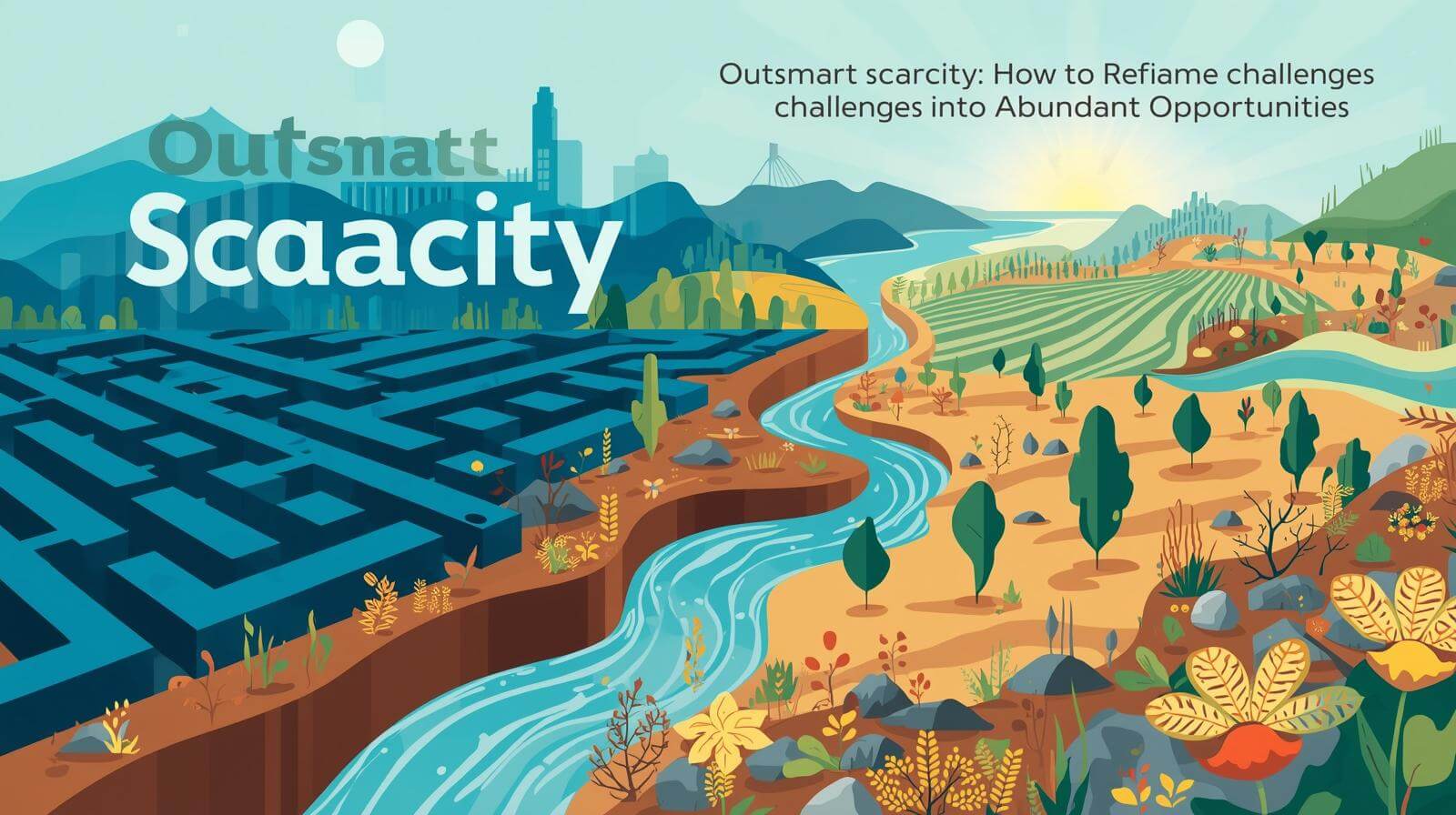
Outsmart Scarcity

How to Reframe Challenges into Abundant Opportunities

Even with the best gratitude practice, moments of challenge and perceived scarcity will arise. It’s in these moments that our mindset is truly tested. This week, we’ll explore how to actively shift your perspective from a scarcity-driven fear to an abundance-focused view of opportunity, even when things feel tough. This isn’t about ignoring problems, but about seeing them through a lens of potential growth and learning.

Understanding the Scarcity Trap
A scarcity mindset tells us there isn’t enough – not enough time, money, love, or opportunities. It often stems from past experiences or societal conditioning and can manifest as fear, anxiety, envy, and a tendency to hold onto things (or ideas) too tightly. It blinds us to possibilities and keeps us stuck in a cycle of lack.

The Power of Perspective Reframing
Perspective reframing is the conscious act of changing the way you look at a situation, especially a challenging one. It’s about asking, “What else could this mean?” or “What can I learn from this?” Instead of seeing a setback as an end, you start to see it as a detour, a lesson, or an unexpected opening for something new.

Practical Steps to Shift Your View

  • Identify the Scarcity Thought: Catch yourself when you’re thinking, “I don’t have enough,” or “This is impossible.” Write it down.
  • Question the Thought: Is it absolutely true? What evidence supports it? What evidence contradicts it? Often, scarcity thoughts are based on assumptions or past fears, not current reality.
  • Find the Hidden Opportunity: For every challenge, there’s usually a hidden opportunity for growth, learning, or innovation.
    • Challenge: “I lost my job.”
    • Reframed Opportunity: “This is a chance to pursue a career I’m more passionate about, learn new skills, or start my own venture.”
    • Challenge: “My business proposal was rejected.”
    • Reframed Opportunity: “This feedback helps me refine my idea, strengthens my resilience, and opens the door to collaborating with a different partner.”
  • Practice Gratitude in Adversity: Even in tough times, there are often things to be grateful for – your health, supportive friends, lessons learned, or simply the resilience you’re discovering. Acknowledging these can soften the blow of scarcity and open your mind to solutions.
  • Limit Exposure to Scarcity Narratives: Be mindful of news, social media, or conversations that constantly focus on lack, fear, and negativity. Seek out inspiring stories of resilience and abundance.

Shifting from a scarcity mindset to one of abundance is an ongoing practice, but it’s one of the most empowering shifts you can make. By actively reframing challenges, questioning limiting beliefs, and integrating gratitude, you’ll not only navigate difficulties with more grace but also discover a wealth of opportunities you might have otherwise missed.

Related Posts:

The Power of Thankfulness

Beyond Thank you

Outsmart Scarcity

Beyond “Thank You”

Deepening Your Gratitude Practice

Last week, we explored the basics of daily gratitude and its incredible potential to foster an abundance mindset. This week, we’re going beyond the simple “thank you” and diving into ways to deepen your gratitude practice. It’s about cultivating a richer, more profound sense of appreciation that can truly transform your emotional landscape and attract even more positive experiences.

The Difference Between Casual and Deep Gratitude
Casual gratitude is acknowledging something good that happened. Deep gratitude, however, involves a more visceral, emotional connection to the feeling of thankfulness. It’s not just what you’re grateful for, but how you feel about it. It’s pausing to truly savor the feeling, recognizing the effort or circumstances that led to it, and understanding its significance in your life.

Techniques to Cultivate Profound Appreciation

  • Sensory Gratitude: Don’t just list things; experience them. If you’re grateful for your morning coffee, take a moment to smell its aroma, feel the warmth of the mug, and taste its richness. If you’re grateful for nature, really see the colors, hear the sounds, and feel the breeze.
  • “Why” Gratitude: For each item on your gratitude list, ask yourself “why” you are grateful for it. For example, instead of just “I’m grateful for my job,” try: “I’m grateful for my job because it provides security, allows me to learn new things, and connects me with supportive colleagues.” This adds layers to your appreciation.
  • Contrasting Gratitude: Sometimes, appreciating the good means remembering what it’s like without it. Thinking about a past struggle you’ve
  • overcome can heighten your gratitude for your current well-being. This isn’t about dwelling on the negative, but about highlighting the contrast to magnify your appreciation.
  • Gratitude Meditation: Find a quiet space and focus on your breath. Then, bring to mind people, experiences, or objects you’re grateful for. Allow the feeling of gratitude to wash over you, noticing it in your body.

The Ripple Effect: How Deep Gratitude Attracts More Abundance
When you consistently practice deep gratitude, you aren’t just feeling good; you’re also changing your energetic vibration. You become more open, more positive, and more attuned to opportunities. This heightened state of being can act as a magnet, drawing more things, people, and experiences into your life that align with your grateful perspective. It’s the law of attraction in action, powered by genuine appreciation.

Conclusion:
Moving beyond superficial thankfulness to a deeper gratitude practice takes a little more intention, but the rewards are immense. By truly savoring and understanding your blessings, you strengthen your abundance mindset and open yourself up to a world of even greater possibilities.

The Power of Thankfulness

0
    0
    Your Cart
    Your cart is emptyReturn to Shop
    Verified by MonsterInsights