
Journaling

Journaling

When I first started journaling, I had no idea how it worked. I thought it was just recording what happened during my day.  As I got older and started to understand what a wonderful tool it is.

Journaling allows you to work through your emotions and dive deeper into your everyday thoughts and behaviors.

  • Having trouble knowing what write or feeling uninspired.  Try doodling drawing etc to get juices flowing.
  • Create a running list of journal prompts that you can turn to in a pinch.
  • If physically writing out your thoughts is causing writer’s block, don’t force yourself to stick with it. You can type in Google docs or use your phone’s notepad application. Digital journals are easy to back up, access, and organize.
  • Let yourself be messy, your journal isn’t here to look pretty. It’s here for you to explore your thoughts, work through big emotions, and encourage introspection.
  • Don’t Edit as You Go – If you make a mistake, scribble it out and keep going. ‘Mistakes” distract you from your train of thought.
  • Carry Your Journal at All Times, you can write whenever inspiration strikes (and you have a few minutes to spare!) Can’t write the entry immediately, jot down a vague heading and some bullet points containing your thoughts and ideas. Later, you can remind yourself what you thought and write the full entry.
  • Write to Yourself – great way to track your progress and growth. Try to remember what it was like to be 5, 10, or 20 years younger. What were you worried about? What were your dreams? After putting yourself in a smaller pair of your own shoes, write a letter to that version of yourself.
  • Write about the people you know now, your job, your family, your pets, your habits, things you’ve overcome, and areas where you’ve changed. Compare and contrast your life now and then.
  • Write About What You Want – don’t force yourself to write about something that irritates you. Your journal is a tool meant for your benefit and growth. If you hate a prompt, get annoyed with a specific journal structure, or find an entire guided journal infuriating – you don’t have to stick with it.
  • Write In Different Places – they can trigger different memories and bring out different aspects of your personality
  • Turn Off Distractions
    • Turn off your phone if you can, otherwise put it on silent and place it face down. Put away anything that will distract you as you’re writing.
  •  Set a Timer – set a judgment-free timer for 10 or 15 minutes. If the timer  goes off and you’ve found a flow or are on a thought path you want to dive deeper into, you can continue! But you can’t stop until the timer goes off.

Stream of Consciousness  – write down whatever pops into your head. Don’t worry about finishing sentences – if your thoughts switch, your writing must too!

What are limiting beliefs

Limiting Belief

Limiting beliefs are self-sabotaging and untrue thoughts that a person believes to be true about themselves and their capabilities.

These beliefs limit a person’s potential and keep them from reaching their goals. Some examples of limiting beliefs include: “I’m not smart enough,” “I’m not talented enough,” “I can’t succeed,” “I’m not good enough,” “I’m not worthy,” and “I’m not capable.”

Limiting beliefs can be extremely damaging and can prevent a person from achieving their dreams.

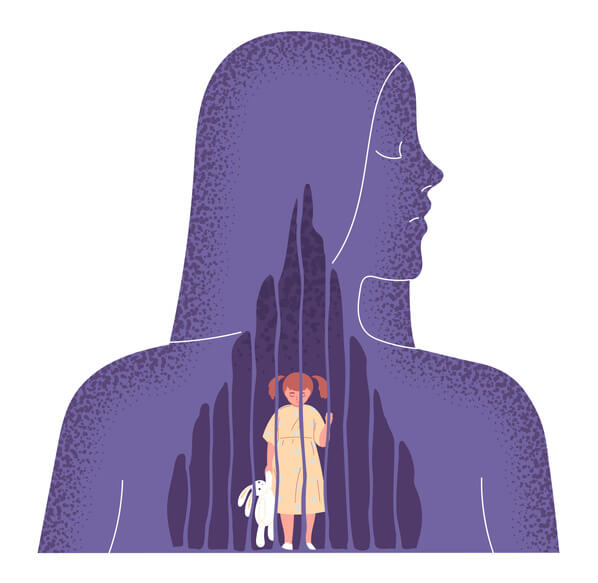
These beliefs can be acquired through childhood trauma, negative experiences, or even society’s standards. For example, if a child fails a test, they may develop a limiting belief that they are “not smart” or “not capable” of succeeding in the future, even though this may not be true.

To overcome limiting beliefs, it’s important to recognize them and challenge them.

Acknowledge the thought, but don’t let it define you or hinder your progress.

Working on self-confidence, self-awareness, and self-acceptance can also be beneficial in overcoming limiting beliefs.

Ultimately, it’s important to recognize that we all have potential, and everyone deserves to be given the opportunity to succeed.

What does Holistic healing mean?

Holistic healing is an approach to health care that looks at the entire person—body, mind, spirit, and emotions—in the quest for optimal health and wellness.

Holistic healing considers the whole person, including all aspects of lifestyle.

It emphasizes the connection between the mind and body and strives to achieve balance and harmony of the mind, body, and spirit.

Holistic healing takes into account all aspects of the individual in determining treatment.

Rather than simply treating the symptoms of a disease, a holistic approach looks at the underlying cause. It attempts to address the physical, mental, emotional, and spiritual aspects of the person.

Holistic healing focuses on using natural remedies and treatments rather than relying on Western medicine. It uses a variety of therapies, such as massage, acupuncture, herbs, nutrition, movement, and energy work. Some therapies, such as homeopathy, may not be widely accepted by Western medicine, but many holistic practitioners believe that these modalities can be effective in treating a variety of illnesses and conditions.

The goal of holistic healing is to create balance in the body so that the body can heal itself. This can be achieved through lifestyle changes, such as a healthy diet, regular exercise, stress management, and spiritual practices. Holistic healing encourages a person to become more aware of their body and its needs, and to take responsibility for their own health and wellness.

What is healing energy healing?

healing hands, chakras and lotus

This is the first in a series on Energy Healing.

Healing energy is the power of positive energy which can be used to heal and help others. It is often used as a way to improve physical, mental, and spiritual health. Healing energy is a form of energy healing which is based on the belief that all living things have energy fields that can be harnessed to heal and promote wellness.

Energy healing includes many modalities. These modalities include spiritual healing, laying on hands, prayer, meditation, crystal energy work, reiki, crystal reiki, emotional freedom technique, yoga, plant-based healing (includes aroma therapy, essential oils and Herbal remedies), chakra work, and sound therapy (also known as sound bath) are the ones I am most familiar with. (This may not be a comprehensive list but does give a general idea of what is available. I will be going into more detail on each of the modalities in later posts.

Energy healing is not specific to any religion or spiritual belief. The modalities can be used by anyone.

Reiki is one of the most popular forms of healing energy. It is based on the belief that the practitioner can channel energy from the universe and transfer it to the recipient. Reiki is commonly used to address physical ailments such as chronic pain, improve emotional health, reduce stress, and promote spiritual growth.

Pranic healing is another form of healing energy. Pranic healing is based on the belief that the body has an energy field that can be manipulated to heal the body and mind. This form of healing focuses on the manipulation of the body’s energy fields to restore balance and wellbeing.

Crystal healing is a form of healing energy that uses crystals to absorb and direct energy. Crystals are believed to have healing properties and can be used to balance the body’s energy fields. Crystal healing is often used to promote physical and emotional healing as well as spiritual growth.

Sound healing is a form of healing energy that uses sound vibrations to restore balance and wellbeing. Sound healing works with the body’s energy fields to reduce stress, improve mental clarity, and promote healing.

These are just a few examples of healing energy. Each form of healing energy has its own unique benefits and can be used to improve physical, mental, and spiritual health.

0
    0
    Your Cart
    Your cart is emptyReturn to Shop