Outsmart Scarcity

How to Reframe Challenges into Abundant Opportunities

Even with the best gratitude practice, moments of challenge and perceived scarcity will arise. It’s in these moments that our mindset is truly tested. This week, we’ll explore how to actively shift your perspective from a scarcity-driven fear to an abundance-focused view of opportunity, even when things feel tough. This isn’t about ignoring problems, but about seeing them through a lens of potential growth and learning.

Understanding the Scarcity Trap
A scarcity mindset tells us there isn’t enough – not enough time, money, love, or opportunities. It often stems from past experiences or societal conditioning and can manifest as fear, anxiety, envy, and a tendency to hold onto things (or ideas) too tightly. It blinds us to possibilities and keeps us stuck in a cycle of lack.

The Power of Perspective Reframing
Perspective reframing is the conscious act of changing the way you look at a situation, especially a challenging one. It’s about asking, “What else could this mean?” or “What can I learn from this?” Instead of seeing a setback as an end, you start to see it as a detour, a lesson, or an unexpected opening for something new.

Practical Steps to Shift Your View

  • Identify the Scarcity Thought: Catch yourself when you’re thinking, “I don’t have enough,” or “This is impossible.” Write it down.
  • Question the Thought: Is it absolutely true? What evidence supports it? What evidence contradicts it? Often, scarcity thoughts are based on assumptions or past fears, not current reality.
  • Find the Hidden Opportunity: For every challenge, there’s usually a hidden opportunity for growth, learning, or innovation.
    • Challenge: “I lost my job.”
    • Reframed Opportunity: “This is a chance to pursue a career I’m more passionate about, learn new skills, or start my own venture.”
    • Challenge: “My business proposal was rejected.”
    • Reframed Opportunity: “This feedback helps me refine my idea, strengthens my resilience, and opens the door to collaborating with a different partner.”
  • Practice Gratitude in Adversity: Even in tough times, there are often things to be grateful for – your health, supportive friends, lessons learned, or simply the resilience you’re discovering. Acknowledging these can soften the blow of scarcity and open your mind to solutions.
  • Limit Exposure to Scarcity Narratives: Be mindful of news, social media, or conversations that constantly focus on lack, fear, and negativity. Seek out inspiring stories of resilience and abundance.

Shifting from a scarcity mindset to one of abundance is an ongoing practice, but it’s one of the most empowering shifts you can make. By actively reframing challenges, questioning limiting beliefs, and integrating gratitude, you’ll not only navigate difficulties with more grace but also discover a wealth of opportunities you might have otherwise missed.

Related Posts:

The Power of Thankfulness

Beyond Thank you

Outsmart Scarcity

Beyond “Thank You”

Deepening Your Gratitude Practice

Last week, we explored the basics of daily gratitude and its incredible potential to foster an abundance mindset. This week, we’re going beyond the simple “thank you” and diving into ways to deepen your gratitude practice. It’s about cultivating a richer, more profound sense of appreciation that can truly transform your emotional landscape and attract even more positive experiences.

The Difference Between Casual and Deep Gratitude
Casual gratitude is acknowledging something good that happened. Deep gratitude, however, involves a more visceral, emotional connection to the feeling of thankfulness. It’s not just what you’re grateful for, but how you feel about it. It’s pausing to truly savor the feeling, recognizing the effort or circumstances that led to it, and understanding its significance in your life.

Techniques to Cultivate Profound Appreciation

  • Sensory Gratitude: Don’t just list things; experience them. If you’re grateful for your morning coffee, take a moment to smell its aroma, feel the warmth of the mug, and taste its richness. If you’re grateful for nature, really see the colors, hear the sounds, and feel the breeze.
  • “Why” Gratitude: For each item on your gratitude list, ask yourself “why” you are grateful for it. For example, instead of just “I’m grateful for my job,” try: “I’m grateful for my job because it provides security, allows me to learn new things, and connects me with supportive colleagues.” This adds layers to your appreciation.
  • Contrasting Gratitude: Sometimes, appreciating the good means remembering what it’s like without it. Thinking about a past struggle you’ve
  • overcome can heighten your gratitude for your current well-being. This isn’t about dwelling on the negative, but about highlighting the contrast to magnify your appreciation.
  • Gratitude Meditation: Find a quiet space and focus on your breath. Then, bring to mind people, experiences, or objects you’re grateful for. Allow the feeling of gratitude to wash over you, noticing it in your body.

The Ripple Effect: How Deep Gratitude Attracts More Abundance
When you consistently practice deep gratitude, you aren’t just feeling good; you’re also changing your energetic vibration. You become more open, more positive, and more attuned to opportunities. This heightened state of being can act as a magnet, drawing more things, people, and experiences into your life that align with your grateful perspective. It’s the law of attraction in action, powered by genuine appreciation.

Conclusion:
Moving beyond superficial thankfulness to a deeper gratitude practice takes a little more intention, but the rewards are immense. By truly savoring and understanding your blessings, you strengthen your abundance mindset and open yourself up to a world of even greater possibilities.

The Power of Thankfulness

The Power of Thankfulness

Unlocking Your Abundance Mindset

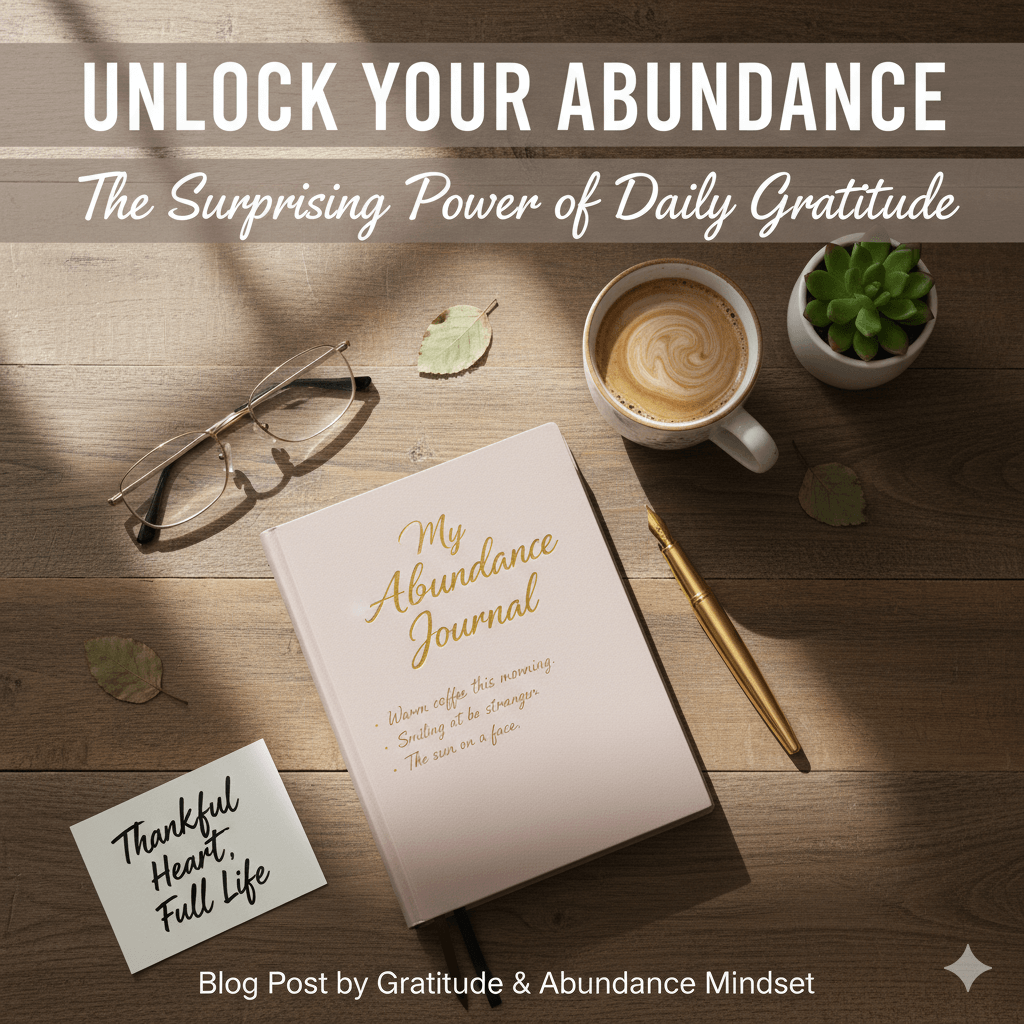
Do you ever feel like you’re constantly chasing the next big thing, always wanting more? While ambition is great, an insatiable desire for “more” can sometimes overshadow the incredible blessings already present in your life. This week, we’re diving into the transformative power of gratitude and how embracing it can profoundly shift your perspective from scarcity to an abundance mindset.

What is an Abundance Mindset?
An abundance mindset isn’t about having unlimited resources; it’s about believing there are enough resources and opportunities for everyone, including yourself. It’s the belief that good things are always possible and that you are capable of creating and attracting positive experiences. Conversely, a scarcity mindset focuses on limitations, lack, and the idea that there isn’t enough to go around.

Gratitude: Your Gateway to Abundance
How does gratitude fit into all of this? Gratitude is the conscious appreciation for what you have, rather than focusing on what you lack. When you consistently practice gratitude, you train your brain to notice the good, big and small, in your life. This simple shift in perspective is a direct pathway to cultivating an abundance mindset. You start to see opportunities instead of obstacles, and blessings instead of burdens.

Simple Gratitude Rituals to Start Today
Ready to begin your gratitude journey? Here are a few easy rituals you can incorporate into your daily life:

  • Gratitude Journal: Dedicate a few minutes each day to write down 3-5 things you’re grateful for. Be specific!
  • Morning Reflections: Before you even get out of bed, think of one thing you appreciate about the coming day or the past day.
  • Gratitude Walk: As you go about your day, consciously notice things that bring you joy or comfort – the warmth of the sun, a beautiful flower, a friendly face.
  • Express Thanks: Make it a point to genuinely thank someone each day, whether in person, by text, or a quick note.

Shifting to an abundance mindset doesn’t happen overnight, but consistent gratitude practice is a powerful catalyst. Start small, be consistent, and watch how your perspective—and your life—begins to transform.

Related Posts:

Illuminating the Unseen with Care

Last week, we discussed what the shadow self is and why integrating it is vital for healing. This week, we’ll equip you with practical and safe tools to begin your exploration. Remember, shadow work is a deep dive into your psyche, and approaching it with compassion and patience is key.

Journaling: Your Personal Mirror

Journaling is perhaps the most accessible and powerful shadow work technique. It provides a private space to explore your thoughts and emotions without judgment.

  • Prompt-based journaling: Use prompts like: “What qualities do I dislike most in others?” “What makes me feel ashamed?” “What am I afraid to admit I want?” “What emotions do I suppress?”
  • Free-flow writing: Simply write whatever comes to mind, allowing your unconscious to surface.
  • Dream journaling: Immediately upon waking, record any dreams. Pay attention to symbols, characters, and emotions.

Active Imagination: Dialogue with Your Inner World

Developed by Jung, active imagination is a powerful technique for conversing with figures from your unconscious.

  • Meditation & Visualization: Find a quiet space, close your eyes, and enter a meditative state.
  • Invite a figure: Imagine a figure representing a shadow aspect (e.g., your inner critic, an angry child, a suppressed desire).
  • Engage in dialogue: Ask it questions, listen to its responses, and observe its appearance and emotions. Treat it as a real entity, learning from its perspective.
  • Record insights: Journal about your experience afterward.

Dream Analysis: Unlocking Symbolic Messages

Dreams are a direct communication from your unconscious mind, rich with symbolic meaning.

  • Record everything: Keep a dream journal by your bed.
  • Identify themes & symbols: Look for recurring patterns, strong emotions, or unusual objects/people.
  • Personal associations: What do these symbols mean to you? (e.g., a snake might mean fear for one person, transformation for another).
  • Connect to waking life: How might the dream be reflecting current challenges or repressed feelings?

Art & Creative Expression: Non-Verbal Release

Sometimes, words aren’t enough. Creative outlets can bypass the conscious mind and access deeper emotions.

  • Drawing, painting, sculpting: Express your shadow feelings visually. Don’t worry about artistic skill, focus on the process.
  • Movement or dance: Allow your body to express emotions or energies you’re holding.
  • Music: Listen to or create music that resonates with your shadow feelings.

Seeking Support: When to Work with a Guide

While many shadow work techniques can be done independently, some aspects might feel overwhelming. Consider working with:

  • Therapists or counselors: Especially those experienced in depth psychology or Jungian therapy.
  • Coaches: Who specialize in inner work or spiritual development.
  • Support groups: Sharing experiences can be incredibly validating.

Remember, shadow work is not about rushing to “fix” yourself. It’s an ongoing process of gentle unraveling and integration. Start with one technique that resonates, and approach it with curiosity and self-love.


What is Shadow Work?

Introduction: Stepping into the Light of Self-Awareness

Have you ever felt a part of yourself that you try to hide? A nagging insecurity, an unacknowledged anger, or a desire you deem “unacceptable”? These hidden aspects form what Carl Jung called the “shadow self.” Embracing this shadow, rather than suppressing it, is the core of shadow work – a profound path to healing and transformation.

What Exactly is the Shadow Self?

The shadow self isn’t inherently “evil” or “bad.” It’s simply the collection of all the traits, emotions, and experiences we’ve pushed into our unconscious, often because they were deemed undesirable by ourselves or society. It can include:

  • Negative traits: Anger, jealousy, selfishness, fear.
  • Positive traits: Creativity, power, assertiveness (if we’ve been taught these are “too much”).
  • Unresolved trauma: Past hurts or experiences we haven’t fully processed.
  • Hidden desires: Passions or ambitions we’ve denied ourselves.

The Power of Acknowledgment, Not Elimination

Shadow work isn’t about getting rid of your shadow; it’s about acknowledging, understanding, and ultimately integrating it. When we suppress our shadow, it can manifest in unhelpful ways: projecting our insecurities onto others, self-sabotage, or cycles of destructive behavior. By shining a light on these hidden parts, we reclaim lost energy and gain a more complete sense of self.

Why Start Shadow Work Now?

The benefits of engaging with your shadow are immense:

  • Greater self-acceptance: You learn to love all parts of yourself.
  • Reduced emotional reactivity: Understanding your triggers diminishes their power.
  • Enhanced creativity and intuition: Reconnecting with suppressed aspects can unleash new potential.
  • More authentic relationships: You show up as your whole self, fostering deeper connections.
  • Profound healing and transformation: Addressing root causes leads to lasting change.

Beginning Your Shadow Work Journey

Starting shadow work can feel daunting, but it’s a gradual process of self-discovery. Here are a few initial steps:

  1. Observe without judgment: Notice your reactions, emotions, and projections. What triggers you? What do you dislike in others that might be a reflection of yourself?
  2. Journaling: Write freely about your fears, insecurities, dreams, and resentments.
  3. Pay attention to dreams: Dreams often offer symbolic insights into the unconscious.
  4. Practice self-compassion: This journey requires kindness and patience.

This week, simply begin to notice. Observe the whispers of your shadow, and know that merely acknowledging them is the first courageous step towards integration.

Energy and Sound Practitioner of the Year

I’m honored to be part of the Sound & Energy Healer of the Year 2025 Contest!
This contest isn’t just about recognition—it’s about giving visibility to the power of sound and energy healing.


Your vote doesn’t just support me, it shines a light on our whole community and helps raise awareness about the impact of these practices in the world.
✅ Everyone gets one free vote every day.
💖 Paid votes count as donations to the Brighter Healing Foundation—supporting Supernaturally, an immersive sound healing film that will bring these vibrations to domes and theaters across the country.

Here’s my profile: https://contest.globalspalliance.com/Contest2025/entry/74


Please vote daily and share—it means more than you know!

Nurturing Your Soul Tribe

Cultivating a Community of Authentic Connection

As we journey on our soul’s path, having a supportive community is invaluable. Your “soul tribe” is the group of people who see you, accept you, and champion your growth. This week, we explore how to find and nurture these deeply resonant connections.

What is a Soul Tribe and Why Do You Need One?

Your soul tribe is comprised of individuals who you feel an instant and deep connection with. These are the people who “get” you on a fundamental level. A soul tribe provides a sense of belonging, mutual support, and a safe space to be your most authentic self. They are the family you choose.

The Qualities of a Soul-Aligned Friendship

  • Unconditional Acceptance: They love and accept you for who you are, flaws and all.
  • Mutual Growth: They inspire you to be a better person and you do the same for them.
  • Shared Values: You are aligned on the things that truly matter in life.
  • Authentic Communication: You can be open and honest with each other without fear of judgment.

How to Call in Your Soul Tribe

Finding your soul tribe often happens when you are actively living in alignment with your own soul’s path.

  • Follow Your Passions: Get involved in activities and communities that light you up.
  • Be Your Authentic Self: The more you embody your true self, the more you will attract those who resonate with you.
  • Set the Intention: Clearly define the qualities you desire in your friendships and hold that intention in your heart.

Nurturing Your Community: The Give and Take of Authentic Connection

Like any relationship, your connection with your soul tribe requires nurturing. Be present for them, celebrate their wins, and offer support during challenges. Authentic community is built on a foundation of reciprocity and mutual care.

Celebrating Your Connections: Rituals for a Thriving Soul Tribe

  • Regular Gatherings: Create intentional time to connect, whether it’s a monthly dinner or a weekly check-in call.
  • Shared Practices: Engage in activities together that nourish your souls, like meditation, nature walks, or creative projects.

By calling in and nurturing your soul tribe, you create a powerful network of support that will enrich your life and help you stay true to your soul’s path.

The Energetics of Connection

Aligning Your Relationships with Your Soul’s Vibration

Every relationship in our lives carries a unique energetic frequency. Some connections leave us feeling uplifted and inspired, while others can feel draining and heavy. This week, we explore the energetics of connection and how to align your relationships with the vibration of your soul’s path.

Understanding the Energy of Your Relationships

Think about how you feel after spending time with different people in your life. Do you feel expanded and joyful, or contracted and depleted? This is a reflection of the energetic exchange between you. Authentic, soul-aligned relationships are those that feel resonant and life-affirming on an energetic level.

Are Your Relationships Draining or Energizing You?

It’s important to take an honest inventory of your relationships. Notice which connections consistently lift you up and which ones tend to bring you down. This isn’t about judging others, but rather about recognizing which relationships are in alignment with the person you are becoming.

The Law of Attraction in Friendships and Partnerships

The energy you put out is the energy you attract. By focusing on cultivating your own inner peace, joy, and authenticity, you naturally draw in people who resonate with that higher vibration. As you evolve on your soul’s path, you may find that some relationships naturally fall away to make space for new, more aligned connections.

How to Raise Your Vibration to Attract Soul-Aligned Connections

  • Practice Gratitude: A daily gratitude practice can significantly shift your energetic state.
  • Engage in Joyful Activities: Make time for things that make your heart sing.
  • Mindfulness and Meditation: These practices help to clear your mind and connect you to your inner guidance.

Rituals to Clear and Protect Your Relational Energy

  • Cord-Cutting Meditation: A visualization to release energetic attachments to people or situations that no longer serve you.
  • Setting Energetic Boundaries: Before interacting with others, visualize yourself surrounded by a protective light.

By becoming more conscious of the energy of your relationships, you can intentionally cultivate connections that nourish your soul and support your highest evolution.

Setting Soul-Aligned Boundaries

Honoring Yourself and Your Relationships

In our quest for deeper connections, it’s essential to understand the importance of boundaries. Far from being walls that keep others out, healthy boundaries are the loving guidelines that protect our energy and honor our needs, allowing for more authentic and sustainable relationships.

What Are Soul-Aligned Boundaries?

Soul-aligned boundaries are the limits we set that are in harmony with our core values and our soul’s path. They are a conscious choice to protect our well-being—physically, emotionally, and spiritually. These boundaries help us to show up in our relationships as our best and most authentic selves.

Why Healthy Boundaries Are an Act of Self-Love

Setting boundaries is a profound act of self-respect and self-love. It sends a message to yourself and others that your needs are valid and important. When you honor your own limits, you are better able to give to others from a place of fullness rather than depletion.

Identifying Your Personal Boundaries

To set effective boundaries, you first need to know what they are. Pay attention to your feelings of resentment, discomfort, or burnout. These are often indicators that a boundary has been crossed. Reflect on what you need to feel safe, respected, and energized in your relationships.

How to Communicate Your Boundaries with Love and Respect

Communicating your boundaries can feel challenging, but it can be done with kindness and clarity. Use “I” statements to express your needs without blaming the other person. For example, “I need some quiet time to recharge after work,” is more effective than, “You’re always demanding my attention.”

Navigating the Challenges of Setting New Boundaries

When you begin setting new boundaries, you may encounter resistance from others who are used to you behaving in a certain way. This is a normal part of the process. Stay firm but compassionate. Remember that those who truly respect you will honor your boundaries, even if it takes them some time to adjust. These are the relationships that are most aligned with your soul’s path.

The Power of Self-Awareness in Building Deeper Connections

The Foundation of Authentic Relationships: Knowing Yourself

Welcome to our journey of building authentic relationships! Before we can truly connect with others on a soul level, we must first cultivate a deep and honest relationship with ourselves. Authenticity in relationships begins with self-awareness. It’s about understanding who you are at your core, what you value, and what your soul truly desires.

What Does It Mean to Be Authentic in a Relationship?

Being authentic means showing up as your true self, without a mask. It’s about being vulnerable enough to let others see your imperfections, your passions, and your unique perspective. When we are authentic, we give others the opportunity to connect with the real us, paving the way for a relationship built on trust and genuine understanding.

The Power of Self-Awareness in Building Deeper Connections

Self-awareness is the cornerstone of authenticity. When you know yourself, you can communicate your needs, desires, and boundaries more clearly. This understanding of your inner world allows you to interact with others from a place of confidence and integrity. You’ll find that the more you understand yourself, the more you’ll attract and cultivate relationships that are in true alignment with your soul’s path.

Uncovering Your Core Values: The Compass to Your Soul’s Path

Your core values are the fundamental beliefs that guide your actions and decisions. They are the essence of who you are. When your relationships are aligned with your core values, you experience a sense of harmony and purpose. Take some time to reflect on what truly matters to you. Is it honesty, compassion, growth, or adventure? Identifying your values is like finding your North Star—it will guide you toward relationships that resonate with your spirit.

Practical Steps to Cultivate Self-Knowledge

  • Mindful Observation: Pay attention to your thoughts, feelings, and reactions without judgment.
  • Seek Feedback: Ask trusted friends or mentors for their honest perceptions of you.
  • Explore Your Interests: What activities make you feel alive and joyful? Your passions often reveal a great deal about your true self.

Journal Prompts for Deeper Self-Discovery

  • What are my five core values, and how do they show up in my current relationships?
  • When do I feel most like my authentic self?
  • What fears or beliefs hold me back from being truly seen by others?

By embarking on this journey of self-discovery, you are laying a powerful foundation for building the authentic, soul-aligned relationships you desire.

0
    0
    Your Cart
    Your cart is emptyReturn to Shop
    Verified by MonsterInsights